If you’ve ever looked inside different electric kettles, you may have noticed that some have a visible metal coil at the bottom, while others appear smooth and seamless. So, do electric kettles have exposed heating elements?
The answer depends on the design and model type — but in modern kettles, most use concealed (hidden) heating elements for safety, hygiene, and better efficiency.
The heating element is the part of the kettle that converts electrical energy into heat to boil water. It’s typically made of a metal alloy (like nickel-chromium) that resists electricity, creating heat as current flows through it.
Depending on the model, this element may be exposed (visible coil inside the kettle) or concealed (hidden under a metal plate).
| Type | Appearance | Performance | Maintenance | Common in |
|---|---|---|---|---|
| Exposed Heating Element | Visible coil at the bottom of the kettle | Slightly faster at boiling small amounts | Harder to clean, prone to limescale | Older or low-cost models |
| Concealed Heating Element | Flat metal base — no visible coil | Even heating, safer, easier to clean | Minimal maintenance | Modern stainless steel or glass kettles |
Let’s take a closer look at the differences.
These are coiled wires visible at the bottom of the kettle’s interior. When electricity passes through, they heat up directly in contact with the water.
Advantages:
Slightly faster heating for small quantities.
Lower manufacturing cost.
Disadvantages:
Difficult to clean due to mineral buildup.
Can trap limescale or residue, affecting water taste.
More likely to corrode or wear out over time.
Unsafe to run dry (no boil-dry protection in older designs).
Exposed elements were common in kettles produced before the 2000s or in budget travel models today.
Modern electric kettles feature a sealed stainless steel base covering the heating coil underneath. The metal plate transfers heat evenly to the water without direct exposure.
Advantages:
Safer: Prevents contact with metal coils and reduces shock risk.
Hygienic: Smooth surface is easier to clean and descaling is simpler.
Durable: Less prone to corrosion or mineral damage.
Efficient: Provides even heat distribution and supports automatic shut-off sensors.
Disadvantages:
Slightly higher cost.
May take a few seconds longer to heat small volumes (negligible in daily use).
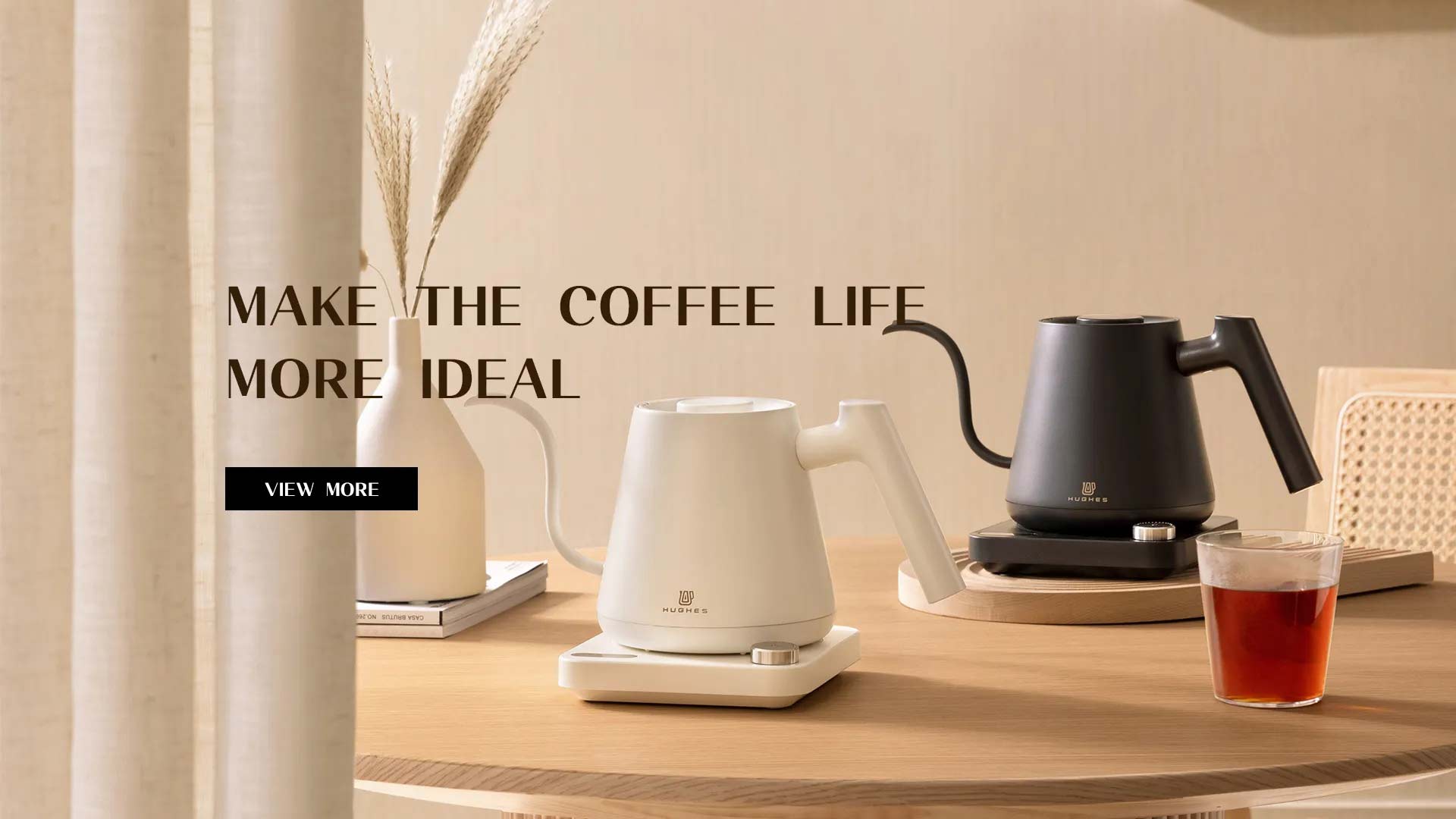
This design is standard in premium models like Hughes Coffee’s pour-over kettles, combining efficiency with safety.
Over the last decade, almost all high-quality manufacturers have shifted to concealed heating technology because it:
Extends the appliance’s lifespan.
Complies with CE, UL, and ISO safety certifications.
Enhances energy efficiency by reducing heat loss.
Improves hygiene — fewer places for scale or bacteria to collect.
It’s also compatible with modern auto shut-off systems, since temperature sensors can be installed directly beneath the heating plate.
To check your kettle:
Open the lid and look inside.
If you see a flat, smooth metal bottom, it’s a concealed element.
If you see a metal coil or spiral, it’s an exposed element.
Most modern stainless steel and glass kettles — especially from reputable brands — use the concealed design.
Hughes Coffee electric kettles use concealed stainless steel heating elements engineered for safety, precision, and long-term durability.
Seamless inner surface — prevents mineral buildup.
Faster boiling time with even heat distribution.
Boil-dry and overheat protection for user safety.
304 stainless steel construction — rust-resistant and food-grade safe.
Easy cleaning — no exposed wires or hard-to-reach spots.
This ensures your water remains pure-tasting and your kettle operates reliably for years.
Even with concealed elements, regular cleaning keeps your kettle in peak condition:
Descale monthly using vinegar or citric acid to remove mineral deposits.
Avoid scraping the bottom with metal tools.
Rinse after descaling to remove any acid residue.
Keep the base dry to protect internal circuitry.
A clean concealed element ensures optimal heating performance and longevity.
| Feature | Exposed Element | Concealed Element |
|---|---|---|
| Appearance | Visible coil | Flat metal base |
| Safety | Lower | Higher |
| Cleaning | Difficult | Easy |
| Lifespan | Shorter | Longer |
| Energy Efficiency | Moderate | Excellent |
| Taste Purity | May affect water | Clean and neutral |
While older electric kettles used exposed heating elements, modern models — especially stainless steel and glass designs — now feature concealed elements that are safer, cleaner, and longer-lasting.
If you’re looking for a reliable, hygienic, and efficient kettle, choose one with a sealed heating base, such as Hughes Coffee’s stainless steel electric kettle.
With concealed heating technology, you get faster boiling, easier cleaning, and superior safety — every time you brew your favorite cup.

 WhatsApp:
 Mobile Phone:
 Contact Now