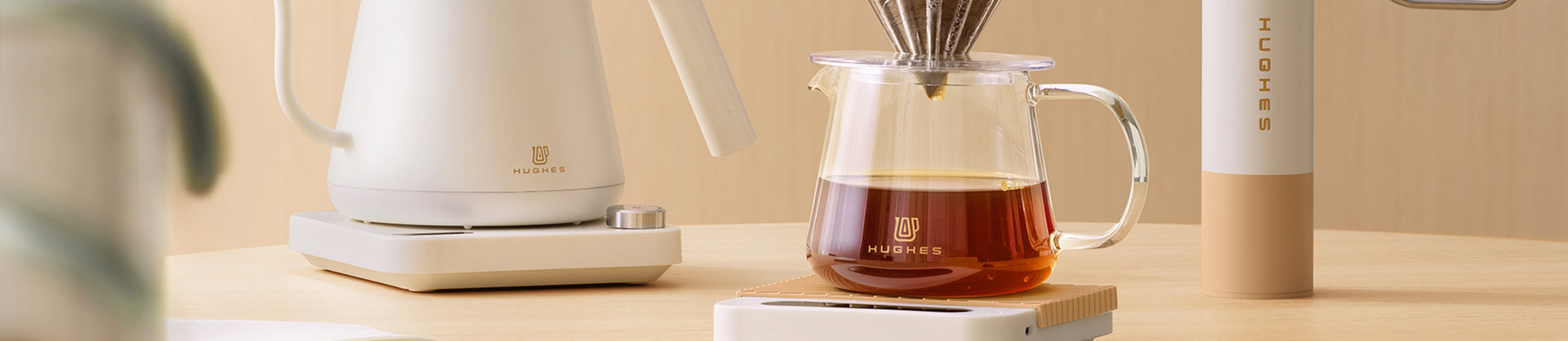
A glass electric kettle is not only functional but also visually elegant — it lets you watch the water boil in clear transparency, creating a modern centerpiece for your kitchen or coffee station.
However, like all kitchen appliances, it needs regular cleaning to maintain performance, safety, and appearance.
At HUGHES Coffee, we design our electric glass kettles to be easy to clean, resistant to limescale, and durable for everyday use.
In this guide, you’ll learn how to clean your electric glass kettle properly, prevent buildup, and keep it looking crystal-clear.
Over time, minerals from tap water — mainly calcium and magnesium — form white deposits or scale inside the kettle. This buildup can:
Slow down heating efficiency
Dull the glass appearance
Affect water taste and clarity
Shorten the appliance’s lifespan
By cleaning your glass kettle regularly, you ensure faster boiling, cleaner taste, and longer service life. For hard-water areas, descaling every 2–4 weeks is highly recommended.
Before cleaning, prepare the following materials (all safe and affordable household items):
White vinegar or lemon juice (natural descalers)
Soft sponge or microfiber cloth
Baking soda (optional) for deep cleaning
Clean water for rinsing
Soft brush for corners or under the spout
Avoid using metal brushes, bleach, or harsh chemicals, as these can scratch the glass or damage the internal heating plate.
Always start by unplugging the kettle and allowing it to cool completely. Never immerse the base or electrical components in water.
Mix one part white vinegar (or lemon juice) with one part water.
Pour the mixture until it covers the kettle’s heating element — about halfway full.
Turn on the kettle and bring the solution to a gentle boil, then switch it off automatically.
Let the mixture sit for 15–20 minutes. The mild acidity will dissolve limescale and mineral stains naturally.
After soaking, pour out the solution carefully.
Refill with fresh water, boil again, and discard to remove any remaining vinegar or lemon scent.
Use a damp cloth or soft sponge to wipe down the outer glass body and handle.
For tough spots, dip the cloth in a diluted vinegar solution and gently rub until clean.
Wipe dry with a soft microfiber towel and leave the lid open for 5–10 minutes to let moisture evaporate.
Your kettle will look as good as new — clear, bright, and ready for the next brew.
If your kettle has stubborn deposits, try this enhanced cleaning method once a month:
Add 1 tablespoon of baking soda to the vinegar-water solution.
Boil and let it sit for 30 minutes.
Use a soft brush to scrub away remaining residue.
Rinse thoroughly with clean water twice before next use.
This method restores transparency and removes cloudy layers from the glass wall and heating plate without damaging the material.
Hughes Coffee Electric Glass Kettles are made from borosilicate glass, known for its high thermal resistance and clarity. To maintain its shine:
Never use abrasive pads — they can cause fine scratches.
Avoid sudden temperature shocks — don’t rinse a hot kettle with cold water.
Wipe after each use to prevent mineral stains or fingerprints.
Polish gently with a dry microfiber cloth for extra clarity.
Regular care keeps the glass sparkling and helps maintain the modern, elegant look that defines Hughes Coffee appliances.
An ounce of prevention saves hours of cleaning. Follow these simple habits to minimize future limescale:
Use filtered or purified water instead of hard tap water.
Empty the kettle after each use — don’t leave standing water overnight.
Rinse weekly even if no visible scale appears.
Descale monthly if you live in a hard-water area.
Store with the lid open occasionally to let moisture escape.
These small habits can extend your kettle’s lifespan significantly.
Always disconnect from power before cleaning.
Never submerge the base or electrical connector in water.
Avoid harsh chemicals or metal scouring tools.
Make sure the kettle is completely dry before plugging back in.
Keep vinegar or lemon cleaning cycles supervised while heating.
All Hughes Coffee electric kettles include boil-dry protection and automatic shut-off, ensuring that even during cleaning cycles, safety is never compromised.
Our glass kettles combine beauty, function, and convenience, designed for modern kitchens that value both aesthetics and performance.
Key features include:
High-borosilicate glass body: Durable, stain-resistant, and heatproof.
Fast-boil technology: Boils water quickly while conserving energy.
LED indicator lighting: Elegant visual cue during heating.
Automatic shut-off and boil-dry protection: Enhanced safety and efficiency.
Easy-to-clean structure: Wide mouth design simplifies maintenance.
With the right care, a Hughes Coffee glass kettle stays brilliant and efficient for years.
Q1: How often should I clean my electric glass kettle?
Every 2–4 weeks for light use, or weekly if you live in a hard-water area.
Q2: Can I use vinegar and baking soda together?
Yes. The combination enhances descaling power, but rinse thoroughly afterward to remove any residue.
Q3: What if my kettle has cloudy spots even after cleaning?
Repeat the vinegar-boil method or gently polish with lemon juice and a soft sponge.
Q4: Can I put my glass kettle in the dishwasher?
No. Always clean manually — electrical parts and heating elements are not dishwasher-safe.
Q5: Will frequent cleaning damage the glass?
No. Hughes Coffee’s borosilicate glass resists corrosion and thermal shock, ensuring long-term clarity and strength.

 WhatsApp:
 Mobile Phone:
 Contact Now