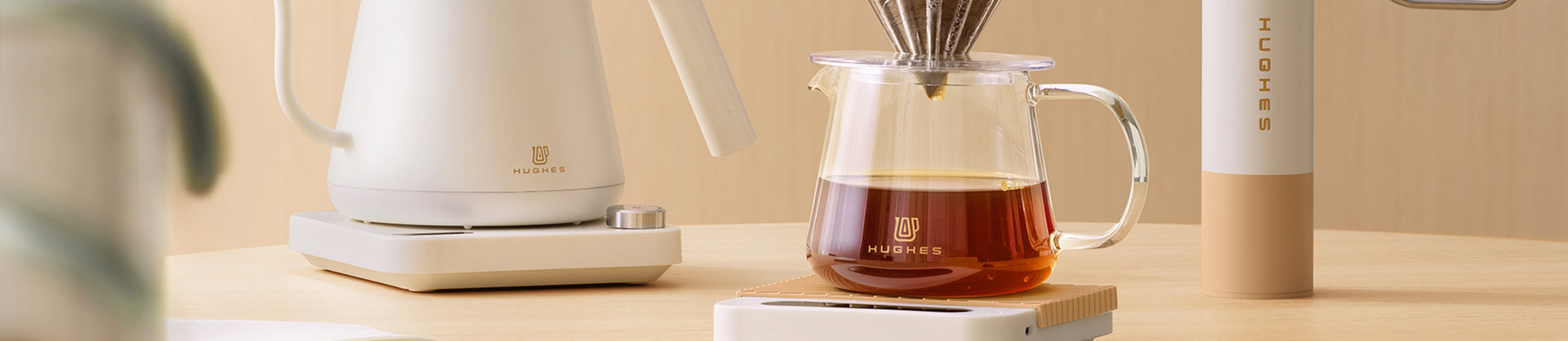
An electric kettle is one of the most convenient kitchen appliances — fast, reliable, and essential for daily tea or coffee. But if your kettle hasn’t been used for a while or has been left with standing water, you might notice black or brown spots, an unpleasant odor, or a slimy film inside.
These are signs of mold or bacterial growth caused by moisture and warmth trapped inside the kettle.
At Hughes Coffee, we understand that cleanliness is key to performance and health. Our kettles are designed for easy cleaning and long-term safety. In this guide, we’ll explain how to remove mold from your electric kettle effectively, keep it hygienic, and prevent future buildup.
No.
Even a small amount of mold can contaminate water, causing an unpleasant taste and possible health risks if consumed regularly.
Mold thrives in damp, enclosed environments, and a kettle that’s left closed with water residue inside creates perfect conditions for it to grow.
It’s essential to clean and sanitize the kettle thoroughly before using it again.
Mold inside a kettle is not caused by boiling — since high temperatures kill spores — but by residual moisture after use. Common causes include:
Leaving water sitting inside for several days
Storing the kettle with the lid closed
Not drying the kettle after cleaning
Using it infrequently in a humid environment
All these factors allow mold spores from the air to settle and multiply.
To clean mold safely without damaging your kettle, prepare the following:
White vinegar or lemon juice (natural disinfectants)
Baking soda (for deodorizing and gentle scrubbing)
Clean water
Soft sponge or microfiber cloth
Small brush or bottle brush for interior corners
Avoid using bleach or harsh chemicals, as they can leave harmful residues and corrode the metal or glass.
Always unplug the kettle first. Remove the lid and visually inspect the inside — note any dark patches, slime, or odor that indicate mold presence.
Combine equal parts white vinegar and water, filling the kettle halfway.
The acidity of vinegar kills mold spores and breaks down organic residue.
Turn on the kettle and bring the mixture to a boil. Once it shuts off automatically, let the hot solution sit for 20–30 minutes to disinfect thoroughly.
Pour out the vinegar water and rinse several times with clean water.
Then, boil a full kettle of fresh water once or twice to remove any remaining odor.
Use a damp sponge dipped in diluted vinegar to wipe the outer body and underside of the lid — these areas often harbor moisture.
If mold is visible under the lid or around the spout, use a small brush to scrub gently.
If a vinegar smell lingers, mix 1 teaspoon of baking soda with water, boil, and rinse again.
This neutralizes any remaining acidity and leaves the kettle fresh.
If the kettle hasn’t been cleaned in a long time or has visible buildup, repeat the process using this stronger method:
Mix ½ cup vinegar + 1 tablespoon baking soda + 1 cup water.
Let it sit for an hour before boiling.
Scrub with a soft brush or cloth.
Rinse thoroughly and boil clean water twice before use.
This removes even the most stubborn stains while restoring hygiene and brightness.
Once your kettle is clean, prevention is key. Follow these simple maintenance habits:
Empty after each use. Never leave standing water overnight.
Keep the lid open for a few minutes after boiling to let moisture evaporate.
Wipe dry the interior and spout after cleaning.
Clean every 2–3 weeks with vinegar or lemon water to prevent mineral and microbial buildup.
Store in a dry, ventilated place to reduce humidity.
Every Hughes Coffee Electric Kettle features a smooth, easy-clean interior and wide-mouth opening, making these steps simple and fast.
Our kettles are designed with food-safe materials and precision construction to resist residue, scaling, and microbial buildup.
Key cleaning advantages include:
Stainless steel or borosilicate glass interiors — smooth surfaces that resist mold growth.
Wide openings for easy access and wiping.
Auto shut-off and boil-dry protection — ensure no leftover heat encourages humidity.
Removable lids (on selected models) for thorough cleaning and airflow.
These details make Hughes Coffee kettles both hygienic and durable, ensuring you always enjoy safe, fresh water.
Q1: Can boiling water alone kill mold in a kettle?
Boiling kills most mold spores, but it doesn’t remove the residue or smell. A vinegar or lemon cleaning cycle is still necessary.
Q2: Can I use dish soap to clean mold?
Dish soap removes surface dirt but isn’t strong enough to sanitize. Always follow up with vinegar or baking soda.
Q3: What if the mold keeps returning?
Ensure you dry the kettle completely after each use. Persistent mold could mean high humidity — store it in a drier location.
Q4: Will vinegar damage the heating plate?
No. Vinegar is safe for stainless steel heating elements if diluted with water and rinsed afterward.
Q5: Can I use bleach to remove mold?
Avoid it. Bleach can corrode metal, leave harmful residues, and is unsafe for food-contact surfaces.
Previous: How To Clean New Electric Kettle

 WhatsApp:
 Mobile Phone:
 Contact Now