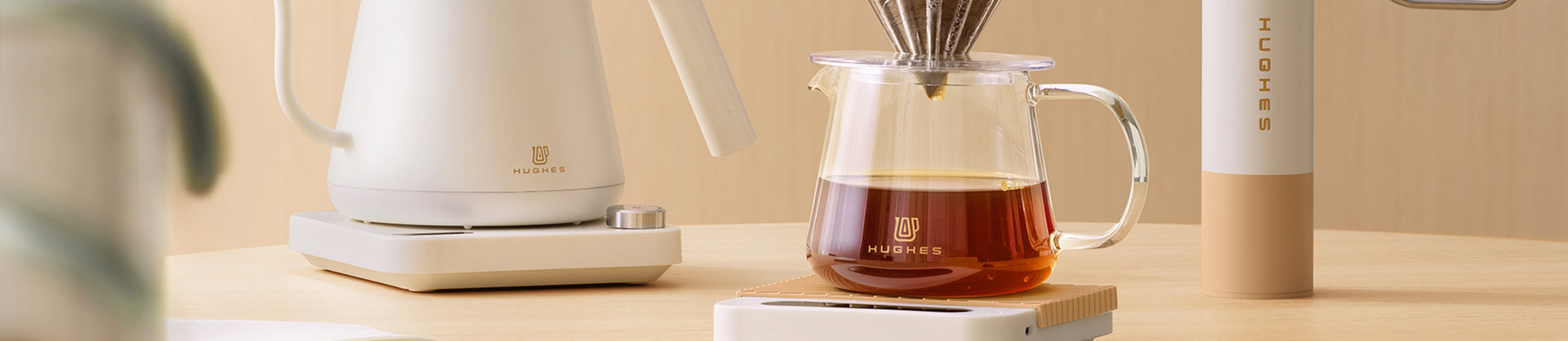
When you buy a new electric kettle, the first thing you want is that perfect cup of tea or coffee — clean, fresh, and pure.
However, before using it for the first time, it’s important to clean your new kettle properly. This helps remove factory residues, dust, lubricants, or protective coatings that may remain from the manufacturing process.
At Hughes Coffee, all of our electric kettles are built with high-quality stainless steel and borosilicate glass, thoroughly tested before packaging. Still, a quick initial cleaning ensures your first boil is as fresh and safe as every cup that follows.
Even though new electric kettles are unused, they may still contain:
Manufacturing residues such as lubricants or protective oils
Dust or particles from packaging and transport
New-metal or plastic smell from seals, lids, or handles
A simple cleaning process removes these harmless but unpleasant residues, guaranteeing clean-tasting water and better performance from the start.
You can clean your new kettle using safe, household materials:
White vinegar or lemon juice (natural cleansers)
Clean water
Soft sponge or microfiber cloth
Baking soda (optional) for deodorizing
Soft towel for drying
No harsh chemicals are necessary — mild acids like vinegar or lemon juice are perfect for safe, effective cleaning.
Remove all packaging materials, stickers, and plastic films. Check inside the kettle to ensure no small protective pieces or cardboard inserts remain.
Fill the kettle halfway with warm tap water, swirl it gently, and pour it out. This helps remove light dust or debris from the inner surface.
Mix 1 part white vinegar (or lemon juice) with 2 parts water. Fill the kettle halfway with this solution — enough to cover the heating element or base.
Plug in the kettle, bring the solution to a full boil, and let it sit for 15–20 minutes after the automatic shut-off activates.
The mild acid will dissolve any residues and neutralize new-metal odors.
Pour out the vinegar solution and rinse the kettle 2–3 times with clean water.
To remove any lingering smell, fill it again with fresh water, boil once more, and discard.
Use a soft damp cloth to wipe down the kettle’s outer surface, handle, and lid. Avoid wetting the electrical base or plug.
Leave the kettle open for at least 10–15 minutes after rinsing. This allows moisture and any remaining vinegar scent to fully evaporate.
Your new kettle is now ready for safe, odor-free use.
Use lemon juice instead of vinegar to avoid streaks or strong smells.
Avoid sudden temperature changes (like adding cold water to a hot glass kettle).
Wipe with a soft microfiber cloth to keep the surface shiny.
Use white vinegar for the best descaling effect.
Avoid abrasive pads or scouring tools — they can scratch the polished finish.
Gently polish afterward with a dry towel for a spotless shine.
All Hughes Coffee Electric Kettles use food-grade stainless steel and high-clarity glass, making cleaning easy and safe for first-time use.
Never immerse the kettle base in water.
Only the inner body should be cleaned — the power base must stay dry.
Don’t use bleach or harsh detergents.
These can corrode the heating element or leave chemical residues.
Avoid boiling with lids tightly sealed during cleaning.
Allow some ventilation to prevent excess pressure buildup.
Do not overfill.
Fill just below the “MAX” line to avoid overflow during boiling.
Don’t use a metal brush.
It can damage coatings or leave scratches that trap residue later.
Following these precautions ensures your new kettle remains flawless from the beginning.
After the initial cleaning, regular maintenance will keep your kettle efficient and odor-free:
| Cleaning Type | Frequency | Purpose |
|---|---|---|
| Rinse with water | After every use | Prevents mineral spots |
| Vinegar or lemon cleaning | Every 2–4 weeks | Removes scale and buildup |
| Deep clean with baking soda | Every 2 months | Eliminates odor and film |
For households in hard-water areas, more frequent descaling is recommended.
Each Hughes Coffee Electric Kettle is designed for effortless maintenance and long-term durability, featuring:
Wide-mouth design for easy access and rinsing
Food-grade interiors free from harmful coatings
Automatic shut-off and boil-dry protection for safe operation during cleaning
Smooth stainless steel or borosilicate glass that resists scaling and odor retention
From the first boil, you’ll enjoy clean water and fresh taste — every single time.
Q1: Why does my new kettle smell when I use it the first time?
That’s a normal result of manufacturing residue or sealed packaging. Boiling vinegar water once removes the smell completely.
Q2: Can I clean my new kettle with just water?
Rinsing helps, but vinegar or lemon juice ensures complete disinfection and odor removal.
Q3: Is it safe to use vinegar in a kettle?
Yes. When diluted properly, vinegar is completely safe and highly effective for cleaning.
Q4: Should I clean a brand-new glass kettle differently?
Glass kettles can be cleaned the same way — just rinse more thoroughly to avoid streaks.
Q5: How long should I let my kettle dry after cleaning?
At least 10–15 minutes with the lid open before plugging it in again.

 WhatsApp:
 Mobile Phone:
 Contact Now