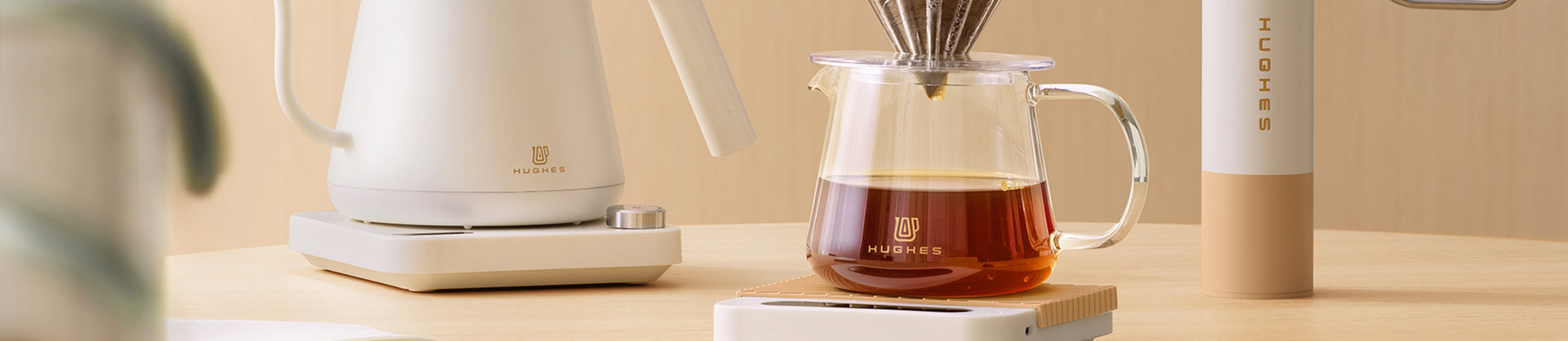
An electric kettle makes boiling water fast and convenient — but over time, you might notice rust stains or reddish spots forming inside, especially around the heating plate or spout.
While this can look concerning, it’s usually caused by minerals and oxidation, not serious corrosion. Fortunately, it’s easy to clean and prevent.
At Hughes Coffee, our electric kettles are made from high-quality stainless steel and borosilicate glass, which resist rust and scaling. However, even the best materials can develop surface discoloration if not cleaned regularly — especially in hard-water regions.
This guide will show you how to remove rust safely and restore your kettle to perfect condition.
Rust (iron oxide) forms when iron reacts with oxygen and moisture.
Although stainless steel is rust-resistant, mineral deposits from hard water can trap small amounts of moisture against the metal surface, causing localized oxidation.
Common causes include:
Hard water buildup containing iron or calcium
Residual water left inside after use
Improper drying or cleaning
Scratches or dents that expose raw metal
Storage in humid environments
The good news is: most of the time, these marks are surface-level and can be cleaned easily with natural household ingredients.
You don’t need harsh chemicals or special tools. The following simple items work best for rust removal:
White vinegar or lemon juice (natural acid cleaners)
Baking soda (for gentle abrasion)
Soft sponge or cloth
Clean water
Small brush (like a toothbrush) for tight spots
Avoid using metal brushes or scouring pads — they can scratch the stainless-steel surface and worsen rusting over time.
Ensure the kettle is unplugged and cool before cleaning. Remove any remaining water or debris.
Mix equal parts white vinegar and water.
Fill the kettle until it covers the rusted area (usually halfway).
Turn on the kettle and bring the solution to a full boil. Once it shuts off automatically, let it sit for 15–20 minutes.
The mild acid dissolves rust particles and mineral buildup.
After soaking, use a soft sponge or toothbrush to scrub the interior gently, focusing on rusted spots. The rust should begin to lift away easily.
Discard the vinegar solution and rinse the kettle 3–4 times with clean water.
Then fill it again with fresh water, boil once, and pour it out — this ensures no vinegar taste remains.
Wipe with a clean, dry cloth and leave the lid open to let any remaining moisture evaporate.
This step prevents new rust from forming.
If the rust stains are older or more stubborn, use baking soda for a deeper clean:
Make a paste using 2 tablespoons baking soda + a few drops of water.
Apply the paste directly to the rust spots.
Let it sit for 10–15 minutes.
Scrub gently with a soft brush or cloth.
Rinse thoroughly and boil clean water afterward.
This natural scrubbing method removes rust without damaging the kettle’s interior finish.
If you prefer a chemical-free approach:
Fill the kettle with water and squeeze in the juice of one lemon.
Add the lemon slices as well for extra acidity.
Boil the mixture and let it sit for 30 minutes.
Rinse and dry.
Lemon’s citric acid removes rust and leaves a fresh, clean aroma — perfect for sensitive users who dislike vinegar’s smell.
Regular care keeps your kettle rust-free and performing efficiently.
Here are simple habits to follow:
Empty after each use — never leave water standing overnight.
Dry thoroughly after cleaning to eliminate moisture.
Descale monthly using vinegar or lemon water to remove mineral buildup.
Use filtered or soft water instead of hard tap water when possible.
Avoid scratching the interior — scratches trap moisture and minerals.
Store with the lid open occasionally to let air circulate.
By following these steps, you’ll ensure your kettle stays rust-free for years.
All Hughes Coffee Electric Kettles are engineered with premium-grade stainless steel and borosilicate glass, both chosen for their corrosion resistance, safety, and easy maintenance.
Key design features include:
Food-grade materials that resist oxidation and discoloration
Smooth, seamless interiors with no hidden crevices for rust to form
Boil-dry and auto shut-off protection, minimizing internal condensation
High-efficiency heating plates that maintain consistent temperature and prevent localized corrosion
With proper care, your Hughes Coffee kettle will maintain its luster and functionality far beyond standard models.
Q1: Is it safe to use a kettle with rust inside?
Small spots aren’t dangerous but should be removed immediately. Continued rusting can affect taste and reduce efficiency.
Q2: Will vinegar damage my electric kettle?
No. When diluted, vinegar is completely safe for stainless steel and effective for cleaning rust and limescale.
Q3: Can rust form on the heating plate?
Yes, especially if water is left sitting for long periods. Regular drying prevents this.
Q4: How often should I clean my kettle to avoid rust?
Once a month in hard-water areas, or every 2–3 months in soft-water environments.
Q5: Can I use baking soda and vinegar together?
Yes — the fizzing reaction helps lift rust particles. Just rinse thoroughly afterward.
Previous: How To Dispose Electric Kettle

 WhatsApp:
 Mobile Phone:
 Contact Now