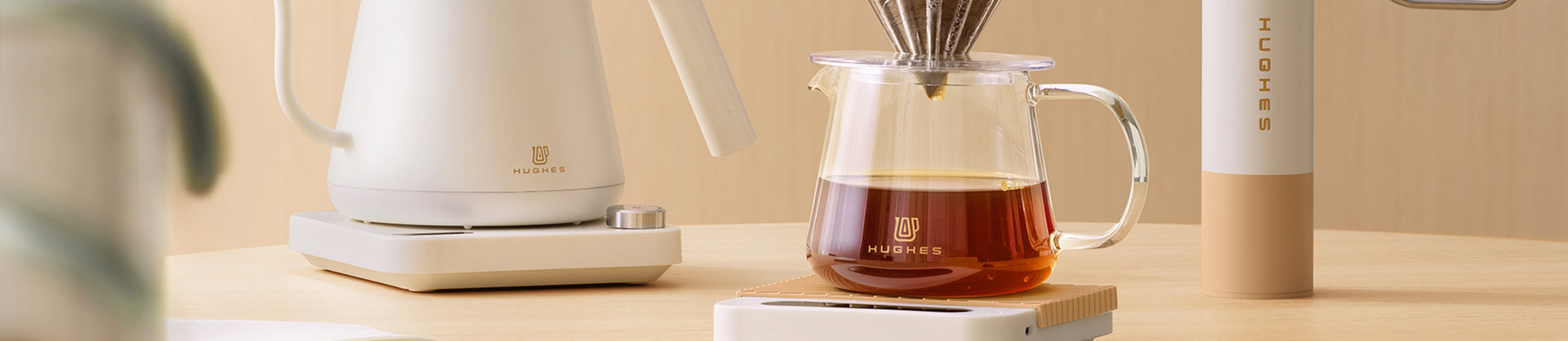
An electric kettle is one of the most frequently used kitchen appliances — fast, efficient, and essential for your daily tea or coffee. But with every boil, minerals and residue from water slowly accumulate inside.
Cleaning your kettle regularly not only keeps your drinks tasting pure but also extends the appliance’s lifespan.
At Hughes Coffee, we design our kettles with high-quality stainless steel and borosilicate glass that make cleaning simple and safe. In this guide, we’ll explain how often to clean an electric kettle, why it matters, and how to do it the right way.
Every time you boil water, minerals such as calcium, magnesium, and iron separate from the liquid and settle on the heating plate and inner walls. Over time, this buildup creates limescale — the chalky white or brown residue often seen inside kettles.
If left unchecked, scale and residue can:
Slow down boiling time and increase energy use
Affect the flavor and clarity of boiled water
Dull the kettle’s appearance
Shorten the heating element’s lifespan
Regular cleaning keeps your kettle efficient, hygienic, and looking like new.
The ideal cleaning frequency depends on your water hardness and usage habits.
| Water Type / Usage | Rinse (Light Cleaning) | Descale (Deep Cleaning) | Full Sanitize |
|---|---|---|---|
| Soft Water Areas | After every 2–3 uses | Every 4–6 weeks | Every 2–3 months |
| Hard Water Areas | After each use | Every 2–3 weeks | Every 1–2 months |
| Daily Users (3–5 times/day) | Daily | Every 2 weeks | Monthly |
| Occasional Users (1–2 times/week) | Weekly | Every 2 months | Every 3 months |
For the average household, a light rinse once a week and a deep clean every 3–4 weeks is usually sufficient.
Performing a simple rinse helps prevent mineral buildup before it becomes visible.
Steps:
Unplug and allow the kettle to cool.
Empty any leftover water.
Rinse the interior with warm water and wipe it with a soft cloth.
Leave the lid open for a few minutes to air dry.
This quick routine takes less than a minute but makes a huge difference in long-term performance.
Descaling removes hardened limescale from the heating plate and inner surfaces.
Use natural, food-safe ingredients like white vinegar or lemon juice.
Steps:
Mix equal parts vinegar (or lemon juice) and water — enough to fill the kettle halfway.
Boil the solution and let it sit for 15–20 minutes.
Pour out the mixture, then rinse thoroughly with clean water.
Boil a full kettle of water once or twice to remove any remaining odor.
Repeat this deep-clean process once or twice a month depending on your water quality.
If your kettle has been unused for a while or develops an odor, a mild baking soda cleaning works best.
Steps:
Add 1 tablespoon baking soda to 1 liter of water.
Boil, let it rest for 15 minutes, then rinse thoroughly.
Wipe the interior with a soft sponge and dry completely.
This kills bacteria, neutralizes odor, and restores freshness without damaging the interior.
Prevention is easier than deep cleaning.
Follow these daily habits to keep your kettle spotless:
Use filtered or purified water to reduce mineral deposits.
Empty after each use — never leave standing water inside.
Keep the lid slightly open when stored to prevent humidity buildup.
Descale regularly — don’t wait until you see white spots.
Wipe exterior surfaces weekly with a soft, damp cloth to keep the finish bright.
Every Hughes Coffee Electric Kettle is designed with smooth, easy-clean interiors and wide openings, making these steps simple and fast.
A clean kettle is also an energy-efficient kettle.
Limescale buildup can insulate the heating plate, forcing the kettle to use more power to boil water.
Tests show that a heavily scaled kettle may take up to 25% more electricity to reach the same temperature.
By cleaning regularly, you ensure faster boiling times and lower energy costs — a win for both performance and the environment.
At Hughes Coffee, we focus on both performance and practicality.
Our kettles include:
Wide-mouth designs for easy access and scrubbing
Concealed heating elements to prevent residue buildup
Food-grade stainless steel interiors resistant to corrosion
Automatic shut-off and boil-dry protection for safe cleaning cycles
Whether it’s weekly rinsing or monthly descaling, our kettles are designed to make maintenance effortless and reliable.
Q1: How often should I clean my kettle if I use it daily?
Rinse daily and descale every 2–3 weeks for optimal performance.
Q2: What happens if I don’t clean my kettle regularly?
Mineral deposits will reduce efficiency, cause discoloration, and affect water taste.
Q3: Can I use vinegar and baking soda together?
Yes, but use them sequentially — vinegar first for scale removal, then baking soda for deodorizing.
Q4: How do I prevent white flakes in boiled water?
Clean your kettle more frequently or switch to filtered water.
Q5: Do Hughes coffee kettles need special cleaners?
No. A simple mix of vinegar, lemon, or baking soda with water is enough for safe, effective cleaning.

 WhatsApp:
 Mobile Phone:
 Contact Now