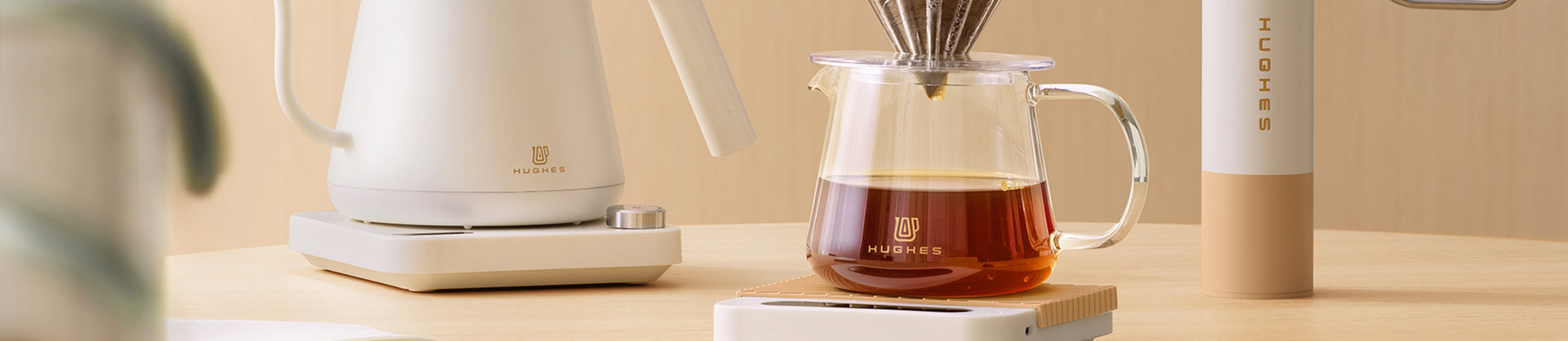
Burnt milk inside an electric kettle can leave stubborn residue, unpleasant odors, and even affect the taste of future beverages. Because milk contains proteins, fats, and sugars, it burns quickly and sticks firmly to the heating plate. Fortunately, you can clean burnt milk safely and restore your kettle with the right methods.
When milk is overheated, the proteins denature and adhere to the metal surface, while sugars caramelize and form brown or black patches.
Burnt buildup reduces heat transfer and can cause uneven boiling or overheating.
Even high-quality kettles like HUGHES stainless steel models should only be used for water, as milk can damage sensors and heating elements.
These cleaning methods require common household ingredients and are safe for stainless steel kettles.
Baking soda helps loosen dairy proteins and neutralize burnt odors.
Add 1–2 tablespoons baking soda into the empty kettle
Fill halfway with hot water
Boil the mixture and let it sit for 20 minutes
Scrub gently with a soft sponge
Rinse thoroughly
This works well if the milk burn is recent and not deeply caramelized.
Vinegar dissolves burnt sugar and fats effectively.
Add 1 cup vinegar + 1 cup water into the kettle
Bring to a gentle boil
Let sit for 20–30 minutes
Rinse and wipe with a soft cloth
Repeat if necessary
This method also removes unpleasant odors left from burnt milk.
Lemon acid softens burnt layers and helps deodorize.
Add juice of 1–2 lemons to the kettle
Fill halfway with water
Boil and leave for 15 minutes
Rinse thoroughly
Works best for light-to-medium burn marks.
Milk fat can leave oily residue that requires soap-based cleaning.
Add warm water + a few drops of dish soap
Let soak for 1–2 hours
Scrub with a soft sponge
Rinse until no soap remains
This method helps when the residue feels sticky or greasy.
Severe burns need deeper cleaning.
This combination lifts heavy carbonized layers.
Cover the burnt area with baking soda
Add a small amount of vinegar and let foam form
Leave for 10–15 minutes
Add warm water and scrub gently
Rinse thoroughly
Repeat the process if needed for stubborn patches.
A burnt milk smell can linger even after residue is removed.
This flushes out leftover odor particles.
This naturally deodorizes and leaves a clean scent.
electric kettles require careful handling to protect internal components.
Electronics in the base can be permanently damaged.
They can scratch stainless steel or damage heating surfaces.
Even if you can clean the residue, boiling milk repeatedly is harmful.
This causes spillover, which can damage the electronic base.
This affects automatic shut-off and can be a safety hazard.
HUGHES kettles are designed for water only, ensuring long-term reliability and safe operation.
Simple habits can help avoid difficult cleaning sessions.
Never pour milk directly into the kettle chamber.
Fresh burns are much easier to remove than carbonized residue.
Burnt milk can leave stubborn stains, odors, and residue inside an electric kettle, but with natural cleaning solutions like baking soda, vinegar, lemon, or dish soap, the kettle can be restored safely. Avoid boiling milk in the kettle to protect heating elements, improve performance, and extend appliance lifespan.
Premium stainless steel kettles—such as HUGHES electric kettles—are durable and efficient, but proper usage and cleaning ensure years of optimal performance.

 WhatsApp:
 Mobile Phone:
 Contact Now