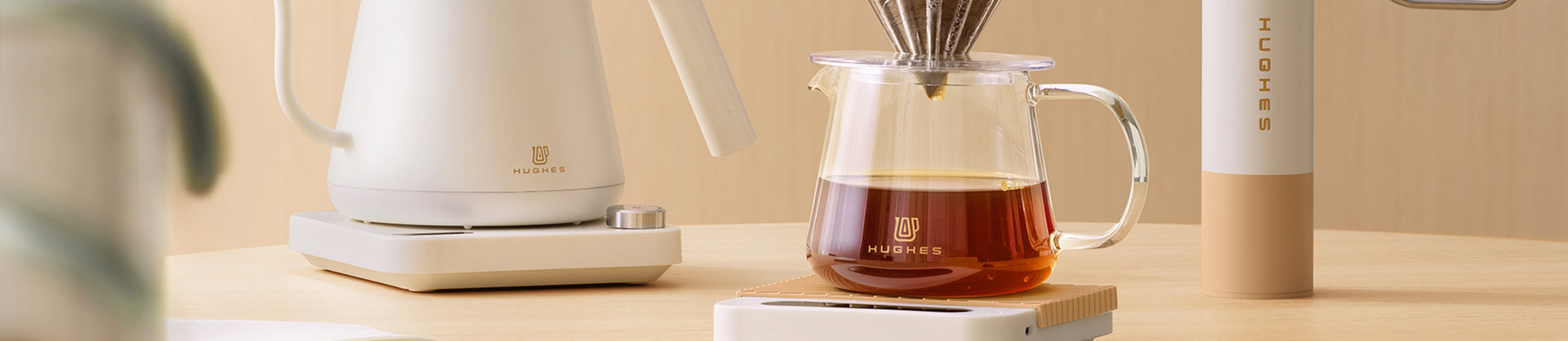
Hard water build-up—commonly seen as white, chalky, or brownish residue—forms naturally inside electric kettles after frequent boiling. These deposits reduce heating efficiency, affect the taste of water, and may shorten the lifespan of the appliance. Fortunately, removing hard water build-up is simple and can be done using safe household ingredients.
Hard water contains high levels of calcium and magnesium minerals.
When water evaporates, minerals crystallize and attach to the heating plate or inner walls.
A thick mineral layer forces the heating element to work harder and can even interfere with automatic shut-off sensors.
Several natural descaling solutions safely remove mineral residue without harming the kettle.
Vinegar dissolves mineral deposits and removes odors.
Add equal parts white vinegar and water to the kettle
Bring the mixture to a boil
Turn off and let it sit for 20–30 minutes
Pour it out
Rinse thoroughly
Boil clean water once to remove vinegar smell
This is ideal for routine cleaning and mild build-up.
Citric acid is a strong natural descaler widely used in kitchens and cafés.
Add 1–2 tablespoons of citric acid to the kettle
Fill with warm water
Boil the mixture
Let it rest for 15–20 minutes
Scrub with a soft sponge
Rinse thoroughly
This method removes thick, stubborn layers of mineral accumulation.
Lemon juice offers a mild acid that breaks down surface mineral deposits.
Squeeze 1–2 lemons into the kettle
Add water until halfway full
Boil the mixture
Let sit for 15 minutes
Rinse well
It is ideal for light build-up and routine freshening.
Mineral residue can also appear on the kettle’s outer surface from spills or splashes.
Wipe gently to avoid scratching.
These can damage stainless steel or painted surfaces, especially for high-end kettles like HUGHES models.
Prevention reduces deep cleaning and extends kettle lifespan.
Allowing water to sit encourages mineral settling.
Recommended cleaning frequency:
Hard water areas: every 2–4 weeks
Soft water areas: every 6–8 weeks
Using filtered or softened water can significantly reduce future build-up.
Several symptoms indicate it's time for descaling.
Mineral layers block heat transfer.
These mineral fragments break off from the heating surface and signal heavy scale formation.
Neglecting build-up can cause long-term damage.
This stresses the heating element and increases electricity usage.
For advanced models from HUGHES, build-up may reduce accuracy of temperature sensors and affect performance.
Hard water build-up is a natural result of frequent boiling, but it can be easily removed with vinegar, citric acid, or lemon juice. Regular cleaning improves boiling efficiency, protects the heating element, and extends the overall lifespan of the kettle.
High-quality Stainless Steel kettles—like those from HUGHES—are designed for durability and corrosion resistance, but proper maintenance ensures optimal performance in both home and commercial settings.

 WhatsApp:
 Mobile Phone:
 Contact Now