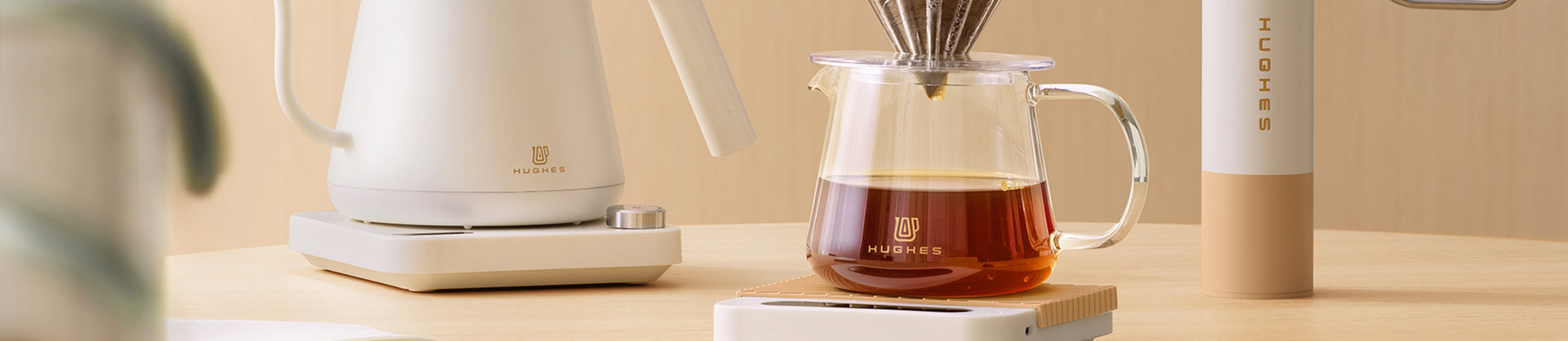
When an electric kettle won’t turn on, the cause is often simple—such as a power issue or a safety cut-off—rather than a major failure. Because kettles combine high power with built-in safety systems, many “dead” kettles are actually protecting themselves. Follow the steps below in order, from the easiest checks to issues that usually mean replacement.
Before assuming the kettle is faulty, confirm it’s getting power.
Plug another appliance into the same outlet to verify the socket works.
Try a different wall outlet.
If using a power strip, plug the kettle directly into the wall.
Check for tripped breakers or blown fuses.
Power issues are the most common cause and take seconds to rule out.
Look closely at the kettle’s cord and plug.
Check for cuts, fraying, or burn marks.
Gently wiggle the cord near the plug and base—if the kettle flickers, the cord may be damaged.
If the plug or cord feels loose or gets warm, stop using the kettle.
A damaged power cord is unsafe to repair at home and usually means replacement.
For cordless kettles, poor contact is a common issue.
Lift the kettle and place it back on the base firmly.
Rotate it slightly to ensure proper electrical contact.
Check that the base contacts are clean and dry.
Water, residue, or debris on the base contacts can prevent power from flowing.
electric kettles will not turn on if safety conditions aren’t met.
Ensure the water level is above the minimum mark.
If the kettle was recently boiled dry, it may have triggered protection.
Many kettles appear “dead” simply because the water level is too low.
If the kettle was used recently, the thermal cut-off may be active.
Unplug the kettle.
Remove it from the base.
Let it cool for 15–30 minutes.
Refill with water and try again.
Overheating or dry-boiling automatically shuts the kettle off until it cools.
Heavy limescale can interfere with internal sensors and heating.
Signs this may be the issue:
The kettle stopped working gradually
It became louder before failing
You live in a hard-water area
Fix: Descale the kettle using citric acid or vinegar, then try again after rinsing and cooling.
Some kettles won’t power on if the lid isn’t fully closed.
Press the lid down firmly until it clicks.
Make sure the on/off switch moves freely and isn’t stuck.
Check for residue or debris around the switch area.
A misaligned lid can prevent the kettle from engaging properly.
If you have access to another compatible base:
Place the kettle on that base and test it.
If it works, the original base is faulty. If it still doesn’t turn on, the problem is inside the kettle itself.
The following issues usually cannot be safely fixed by users:
Failed heating element
Burnt internal wiring
Defective thermostat or thermal fuse
Cracked internal components
Because Electric Kettles operate at high power, opening or repairing internal parts is unsafe without proper training.
Do not open the kettle housing
Do not bypass safety switches or fuses
Do not tape or splice damaged cords
Do not continue testing if you smell burning or see sparks
These actions create serious electrical and fire hazards.
Replace the kettle if:
It still won’t turn on after all basic checks
The cord or base is damaged
Internal components have failed
The kettle is old and heavily scaled
In many cases, replacement is safer and more cost-effective than repair.
An electric kettle that won’t turn on is often caused by power supply issues, safety cut-offs, low water level, overheating, or limescale buildup. By checking these step by step, you can often restore normal operation without tools.
If the problem involves internal electrical components, the safest solution is proper disposal and replacement rather than repair.

 WhatsApp:
 Mobile Phone:
 Contact Now