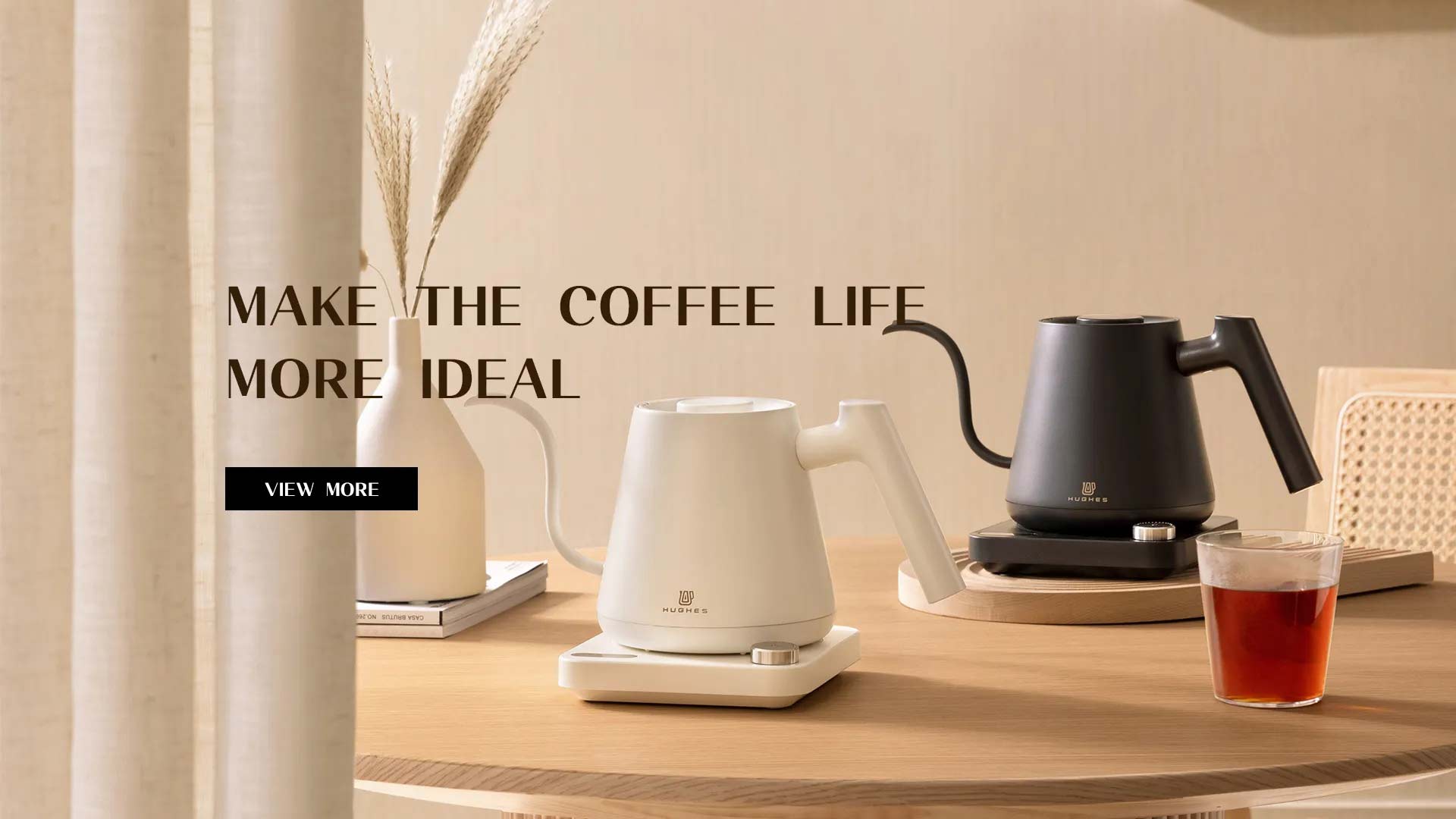
Heating water in an electric kettle is one of the most common kitchen operations worldwide. When properly designed and manufactured, electric kettles are engineered specifically for rapid and safe water boiling.
However, the safety of heating water depends heavily on material standards, heating system stability, temperature protection mechanisms, and production quality control. From a manufacturer’s perspective, safety is not just about boiling water — it is about structured engineering and disciplined manufacturing processes.
As a professional electric kettle manufacturer with ISO9001-certified quality systems and in-house production facilities, Hughes Coffee develops Stainless Steel kettles designed for stable heating performance and international market compliance.
Modern electric kettles include several built-in safety mechanisms:
Automatic shut-off after boiling
Dry-boil protection
Thermal fuse protection
Insulated wiring systems
Food-grade interior materials
These features ensure that once water reaches boiling point, the heating element disconnects automatically, preventing overheating.
Safety depends on engineering accuracy and reliable component integration.
The most important factor in water heating safety is material selection.
High-quality electric kettles typically use:
Food-grade 304 stainless steel interior
BPA-free plastic components
Heat-resistant seals
Controlled weld seams
Poor-quality materials may result in:
Metallic taste
Surface corrosion
Long-term degradation
Chemical instability
Structured material verification during production ensures stable food-contact performance.
Safe electric kettle operation begins in the factory.
A disciplined manufacturing process includes:
Stainless steel material grade verification
Laser welding for leak-proof seams
Heating element precision integration
Temperature sensor calibration
Electrical insulation testing
Automatic shut-off function validation
Leakage and pressure testing
Integrated production under controlled conditions ensures stable performance across bulk production runs.
Manufacturing oversight directly affects long-term safety reliability.
For electric kettles intended for global markets, critical inspection stages include:
Internal surface finish inspection
Weld integrity testing
Temperature control accuracy verification
Thermal protection response testing
Electrical insulation and grounding verification
Repeated boiling cycle testing
Structured quality control ensures consistent safety performance under repeated use.
ISO9001-based quality management supports traceable inspection procedures.
Electric kettles sourced through traders may originate from multiple factories with varying production standards. This can lead to:
Inconsistent heating elements
Variable temperature control systems
Uneven weld quality
Inconsistent safety testing
For distributors and retailers, this increases warranty risk and brand exposure.
Working directly with a manufacturer provides:
Controlled component sourcing
Integrated assembly supervision
Stable batch traceability
Repeatable performance across shipments
Manufacturing discipline reduces long-term safety uncertainty.
For buyers requiring customized electric kettles, OEM and ODM processes may include:
Voltage adaptation (110V / 220V)
Regional plug standards
Temperature control programming
Thermal protection calibration
Compliance labeling and certification support
A structured OEM process involves:
Technical specification review
Prototype validation
Electrical safety testing
Certification preparation
Mass production under locked parameters
Customization must not compromise safety engineering.
When sourcing electric kettles in bulk for retail, hospitality, or commercial use, evaluate:
Consistency of heating element performance
Certification documentation availability
Production capacity stability
Spare parts availability
Packaging integrity
Stable bulk production reduces variation in safety performance.
Electric kettles exported to international markets must meet electrical and material safety standards, including:
Electrical insulation and grounding requirements
Thermal protection regulations
Food-contact material compliance
Voltage and frequency compatibility
Compliance documentation and structured testing protocols are essential for regulated markets such as Europe, the United States, Japan, and South Korea.
Manufacturers with export experience and structured certification management reduce regulatory risk.
Heating water in an electric kettle is safe when the appliance is engineered and manufactured under strict material and safety standards. Risk arises not from the boiling process itself, but from poor material selection, weak heating control, or inadequate safety testing.
For distributors, project buyers, and brand owners, selecting a manufacturer with integrated production control, certified quality management systems, and export compliance capability is essential for long-term product reliability.
Heating water in an electric kettle is safe when the kettle is designed with food-grade materials, automatic shut-off protection, calibrated temperature control, and rigorous electrical safety testing.
Safety is a manufacturing outcome. By sourcing from a professional manufacturer with structured production processes, strict quality control checkpoints, and stable bulk supply capability, buyers can ensure consistent and reliable electric kettle performance across global markets.

 WhatsApp:
 Mobile Phone:
 Contact Now