

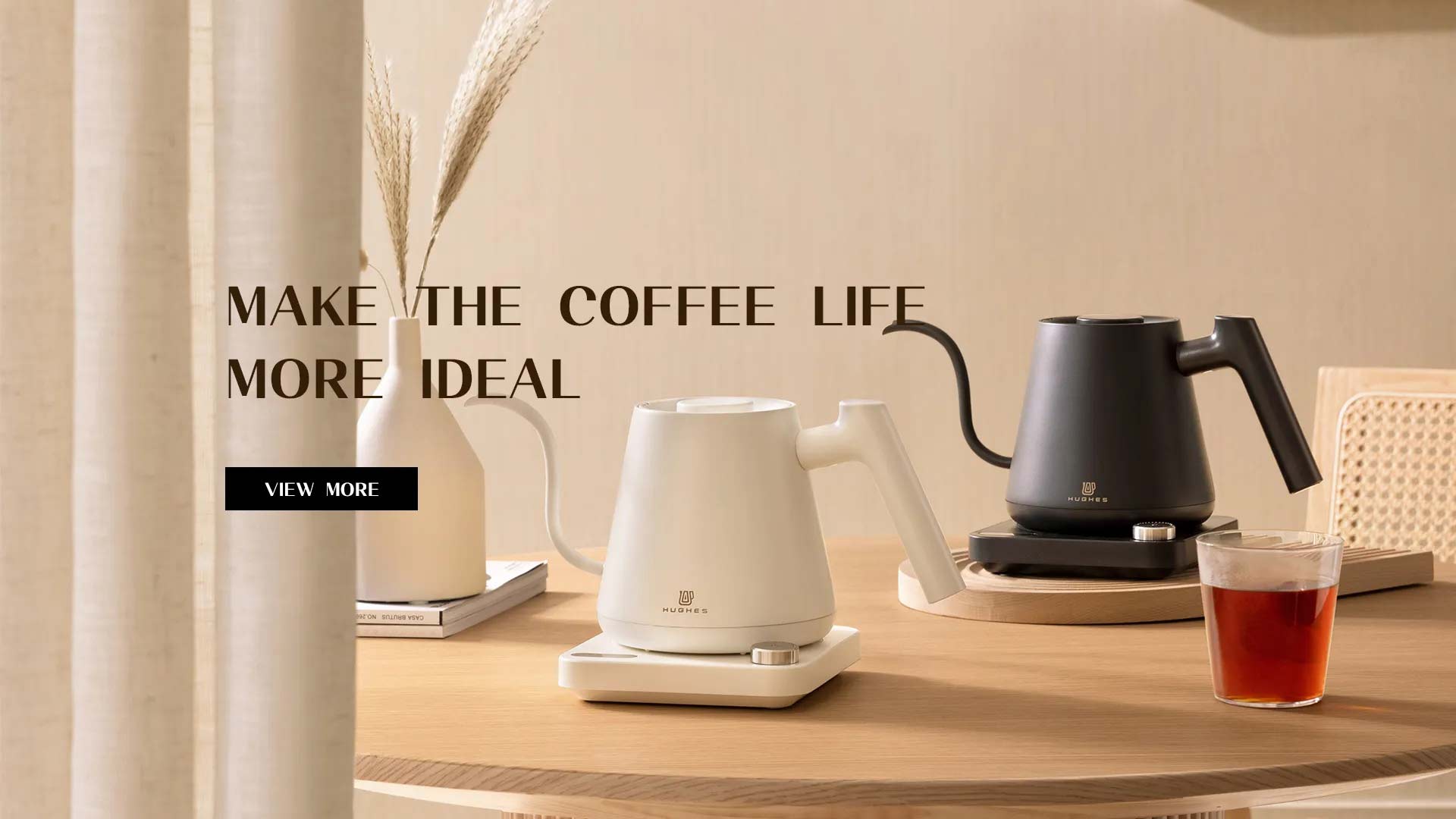
Electric kettles are widely used for boiling water for coffee, tea, infant formula, and daily cooking needs. When properly engineered and manufactured, electric kettles are considered safe and healthy for regular household use.
However, health safety depends on material standards, heating stability, internal surface quality, and strict manufacturing control. From a manufacturer’s perspective, health assurance is achieved through disciplined material selection, structured quality inspection, and export-compliant production systems.
As a professional electric kettle manufacturer with ISO9001-certified quality management and integrated production facilities, Hughes Coffee develops Stainless Steel kettles engineered for food-grade safety and stable heating performance.
1. Material Safety and Food Contact Standards
The primary health concern regarding electric kettles relates to the materials that come into contact with water.
High-quality electric kettles typically use:
Food-grade 304 stainless steel interior
BPA-free plastic components
Heat-resistant sealing materials
Controlled welding seams
These materials are widely recognized for:
Corrosion resistance
Chemical stability under high temperature
Minimal leaching risk
Long-term durability
Poor material selection may lead to surface corrosion, metallic taste, or long-term degradation. Structured material verification during manufacturing prevents these risks.
2. Heating System Stability
Electric kettles use integrated heating elements that convert electricity directly into heat.
Health safety depends on:
Accurate temperature control
Automatic shut-off protection
Dry-boil prevention system
Thermal fuse safety
Properly calibrated heating systems prevent overheating and reduce the risk of material degradation.
Structured thermal testing ensures consistent boiling performance across repeated use.
3. Manufacturing Process Overview
Health safety begins during production.
A disciplined manufacturing process includes:
Stainless steel grade verification
Laser welding precision control
Surface polishing and cleaning
Heating element integration
Temperature sensor calibration
Electrical insulation testing
Repeated boiling cycle validation
Integrated production ensures internal surfaces remain stable under high temperature and repeated use.
Manufacturing control directly influences long-term safety reliability.
4. Quality Control Checkpoints
For health-oriented performance, key inspection points include:
Internal surface smoothness inspection
Weld seam integrity testing
Heating consistency measurement
Leakage testing
Electrical insulation verification
Long-cycle durability testing
Structured quality checkpoints protect against contamination and instability.
ISO9001-based systems provide traceable quality management records.
5. Manufacturer vs Trader: Health Consistency Across Batches
Electric kettles sourced through traders may originate from different factories with varying production standards.
Potential inconsistencies include:
Different stainless steel grades
Uneven welding quality
Variable heating element durability
Inconsistent safety testing
For retailers and distributors, inconsistency increases risk exposure.
Working directly with a manufacturer provides:
Controlled raw material sourcing
Stable production parameters
Batch traceability
Integrated assembly supervision
Manufacturing oversight ensures consistent food-contact safety across bulk supply.
6. OEM / ODM Considerations for Health-Sensitive Markets
For markets with strict health regulations, OEM or ODM customization may include:
Region-specific voltage configuration
Certification labeling
Temperature calibration adjustments
Compliance testing documentation
Packaging adjustments for regulated markets
A structured OEM process includes requirement analysis, sample validation, safety testing, and mass production under locked specifications.
Customization must maintain food-grade and electrical safety standards.
7. Bulk Supply Considerations
For hospitality, retail, or commercial distribution, evaluate:
Material documentation availability
Certification readiness
Production capacity stability
Heating consistency across batches
After-sales technical support
Stable bulk production reduces long-term health and performance concerns.
8. Export Market Compliance
Electric kettles exported to international markets must meet:
Electrical safety standards
Food-contact material regulations
Thermal protection requirements
Voltage and frequency compatibility
Structured testing and documentation ensure compliance in regions such as Europe, North America, Japan, and South Korea.
Manufacturers with export experience reduce regulatory uncertainty.
Strategic Perspective
Using an electric kettle is healthy when the appliance is manufactured with food-grade materials, calibrated heating systems, and strict quality inspection procedures. Health concerns typically arise from poor material selection or weak production control — not from the boiling process itself.
For distributors, brand owners, and project buyers, selecting a manufacturer with integrated R&D, disciplined production systems, and certified quality management ensures reliable product safety and stable long-term performance.
Conclusion
It is healthy to use an electric kettle when the kettle is made from food-grade stainless steel, equipped with stable heating protection systems, and produced under structured quality control standards.
Health safety is a manufacturing outcome. By sourcing from a professional manufacturer with controlled production processes, rigorous quality checkpoints, and export-compliant certification capability, buyers can ensure consistent and reliable electric kettle performance across global markets.

 WhatsApp:
 Mobile Phone:
 Contact Now