
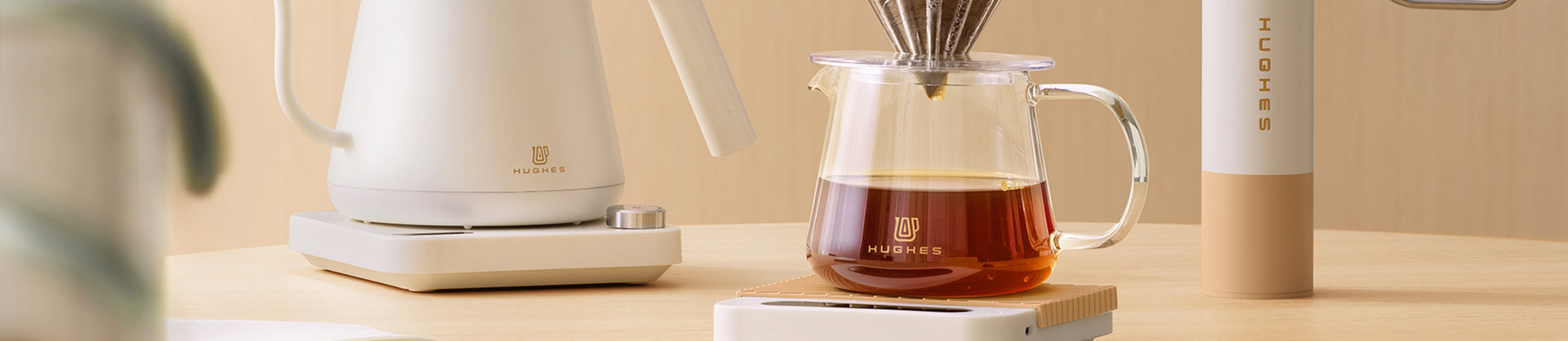

Ceramic electric kettles are often chosen for their aesthetic appeal, thermal insulation properties, and traditional appearance. From a health and safety perspective, ceramic kettles can be safe when engineered and manufactured under strict material and electrical control standards.
However, safety does not depend on the outer material alone. It is determined by the internal heating structure, food-contact surfaces, insulation design, and structured manufacturing discipline.
As a professional electric kettle manufacturer with ISO9001-certified quality management and integrated production capability, HUGHES Coffee focuses on stainless steel electric kettles engineered for food-grade safety, calibrated heating performance, and export-compliant reliability.
1. Material Safety of Ceramic
Ceramic itself is generally stable at high temperatures. Properly manufactured ceramic surfaces:
Do not leach harmful substances
Resist corrosion
Withstand boiling temperatures
Provide good thermal insulation
However, safety depends on:
Glaze composition
Firing temperature control
Surface crack resistance
Structural thickness consistency
Low-quality glaze materials or improper firing may cause surface cracking over time.
2. Internal Heating Structure Matters More
Most ceramic electric kettles are not entirely ceramic internally. The heating system typically includes:
Stainless steel heating base
Embedded electric heating element
Temperature sensor
Thermal fuse protection
Internal wiring insulation
If internal components are poorly assembled or use low-grade materials, electrical risk increases regardless of the ceramic shell.
Electrical safety depends on internal engineering precision.
3. Risk of Cracking and Thermal Shock
Ceramic is more brittle than stainless steel.
Potential concerns include:
Thermal shock cracking
Hairline fractures
Impact sensitivity
Structural weakening over time
Controlled thickness and firing consistency reduce these risks.
In comparison, stainless steel bodies offer higher impact resistance and mechanical durability.
4. Manufacturing Process Overview
Safety begins at the production stage.
For electric kettles, disciplined manufacturing includes:
Material grade verification
Ceramic firing temperature control (if ceramic body used)
Stainless steel heating base integration
Laser welding precision
Heating element calibration
Temperature sensor alignment
Electrical insulation testing
Repeated boil-cycle validation
Integrated production ensures structural stability and electrical reliability across bulk production runs.
Manufacturing control directly impacts long-term safety performance.
5. Quality Control Checkpoints
Key inspection stages include:
Crack resistance testing
Glaze surface inspection
Heating efficiency measurement
Automatic shut-off verification
Leakage current testing
High-voltage insulation testing
ISO9001-based quality systems ensure traceable safety documentation.
Structured inspection reduces electrical and structural risk.
6. Manufacturer vs Trader: Consistency Across Batches
Ceramic electric kettles sourced through traders may originate from multiple upstream suppliers, leading to:
Variable glaze quality
Inconsistent firing control
Different heating component sourcing
Uneven safety testing
This increases performance variability across shipments.
Working directly with a manufacturer provides:
Controlled material sourcing
Unified production parameters
Integrated electrical safety testing
Batch traceability
Manufacturing discipline ensures consistent safety standards in bulk supply.
7. OEM / ODM Safety Customization
For regulated export markets, OEM or ODM processes may include:
Voltage adaptation (110V / 220V)
Plug standard configuration
Certification labeling
Thermal cutoff calibration
Compliance testing documentation
Customization must maintain both structural and electrical safety standards.
Structured engineering ensures design changes do not compromise reliability.
8. Bulk Supply Considerations
For distributors and retail buyers, evaluate:
Material documentation
Electrical certification readiness
Production capacity stability
Structural durability testing
After-sales service planning
Stable manufacturing systems reduce return rates and improve brand reliability.
9. Export Market Compliance
Electric kettles for international markets must comply with:
Electrical insulation standards
Leakage current limits
Thermal protection regulations
Food-contact material requirements
Manufacturers with structured certification management reduce regulatory risk across Europe, North America, Japan, and South Korea.
Strategic Perspective
Ceramic electric kettles can be safe when manufactured under strict material and electrical standards. The outer ceramic body contributes to thermal insulation and aesthetics, but long-term safety depends primarily on internal heating structure, insulation stability, and disciplined production control.
For distributors, brand owners, and project buyers, selecting a manufacturer with integrated R&D, controlled assembly, and certified quality management ensures reliable product safety across bulk orders.
Conclusion
Ceramic electric kettles are safe when built with food-grade materials, properly fired ceramic bodies, calibrated heating systems, and rigorous electrical safety testing.
Health and safety are outcomes of structured manufacturing, not appearance alone. By sourcing from a professional manufacturer with controlled production processes, disciplined quality checkpoints, and export-compliant certification capability, buyers can ensure consistent and reliable electric kettle performance across global markets.

 WhatsApp:
 Mobile Phone:
 Contact Now