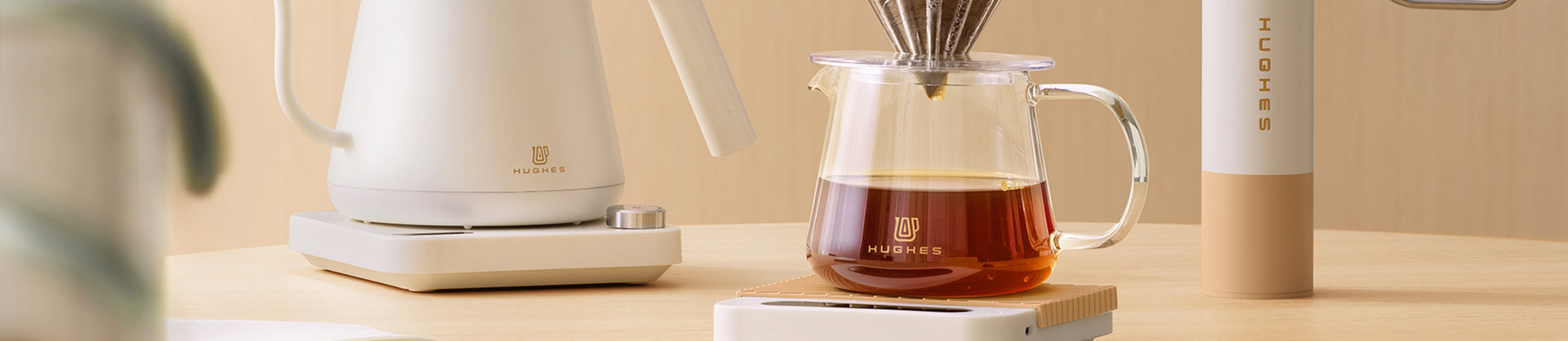
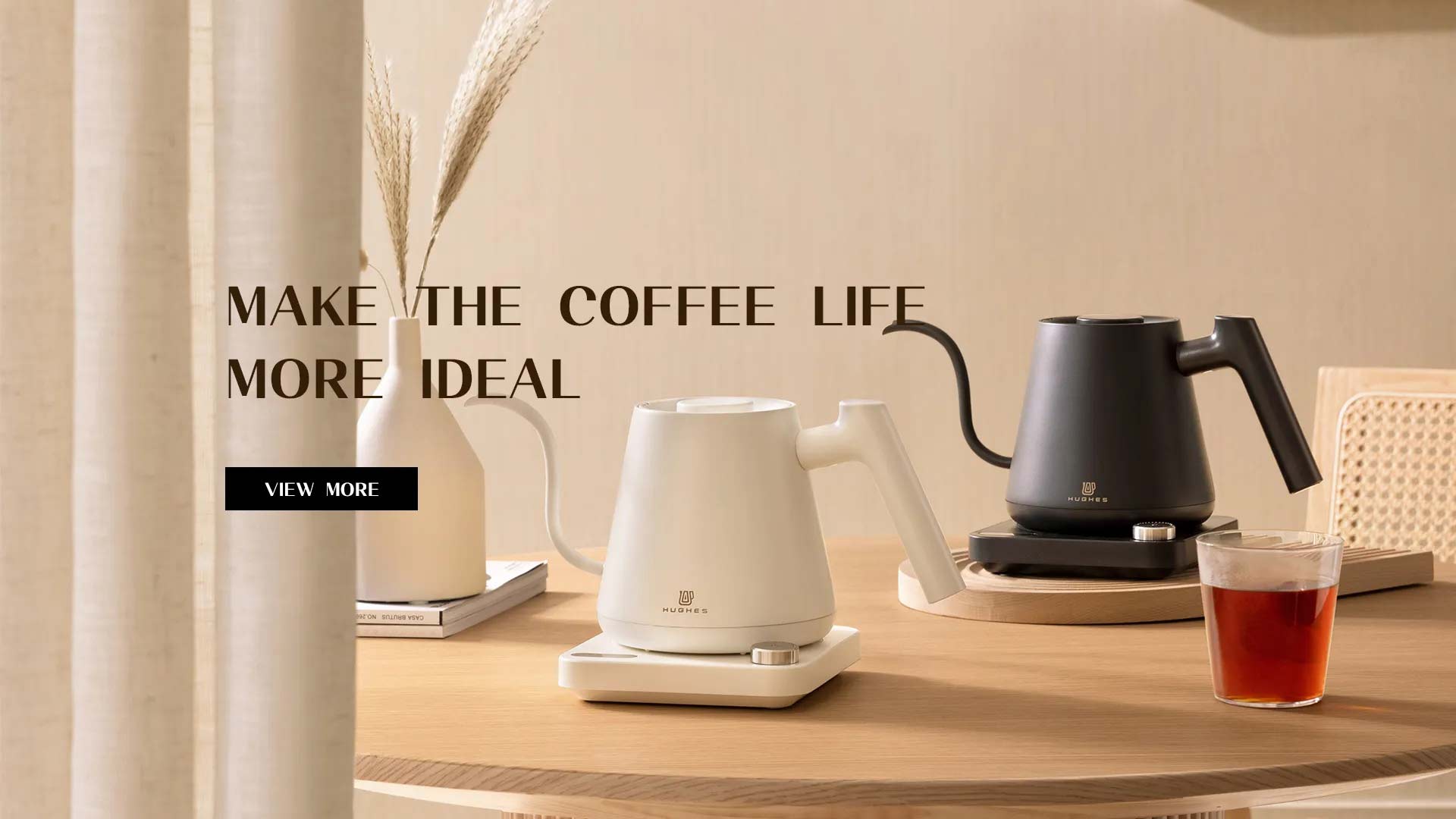
Making tea in an electric kettle with milk powder is possible, but it should be done with care. The safest method is to boil water in the kettle first, then add tea and milk powder separately in a cup or heat-safe pot. Directly mixing milk powder inside the kettle can leave residue on the heating surface, affect taste, and increase cleaning difficulty. For buyers, distributors, and private label developers, this everyday usage question also reveals something larger: kettle design, material standards, temperature control, and cleaning performance all matter when selecting a reliable product line. HUGHES positions itself as a manufacturer of electric kettles, coffee kettles, grinders, scales, milk frothers, and related brewing tools, with OEM and ODM experience and exports to markets including Japan, South Korea, Europe, and the United States.
The recommended process is simple. Fill the electric kettle with clean water only and heat it to the desired temperature. Once the water is ready, pour it into a cup or teapot with the tea. After the tea has steeped, add milk powder and stir until fully dissolved. This method protects the kettle interior and helps maintain stable heating efficiency. It also gives the user better control over tea strength and milk concentration. HUGHES highlights temperature-control kettles and stainless-steel designs as core product directions, which is important for tea and coffee preparation where heating precision and clean water contact surfaces directly affect flavor consistency.
If a buyer intends to develop electric kettles for tea-based beverages, it is important to understand that milk powder behaves differently from plain water. Once heated directly, milk solids can stick to the interior, especially near the heating base, and this can create burnt odor, difficult cleaning, and long-term performance concerns. For that reason, product positioning should clearly distinguish between a water-boiling kettle and a dedicated milk-heating or frothing appliance. HUGHES offers both electric kettles and milk frother products, which shows a more complete product architecture for beverage preparation rather than forcing one appliance to solve every use case.
This topic also shows why manufacturer vs trader is not a small detail. A trader may simply describe a kettle as suitable for tea, coffee, or hot drinks, but a real manufacturer can explain whether the product is engineered only for boiling water, whether the interior is food-contact stainless steel, whether the thermostat is calibrated for controlled brewing, and whether the structure supports easy cleaning after repeated use. HUGHES states that it moved from traditional OEM and ODM manufacturing into its own brand development while remaining rooted in coffee and tea utensil production. That background gives buyers stronger confidence in technical discussion, not just catalog forwarding.
For importers and project buyers, this distinction affects risk. When sourcing from a manufacturer, it is easier to verify heating system design, voltage compatibility, thermal protection, surface welding quality, and long-term batch consistency. HUGHES also emphasizes its welding capability and its experience serving high-end coffee utensil and fine tea set markets, which is especially relevant when stainless steel construction and leak-free assembly are key selling points.
For OEM and ODM projects, the question is not only how to make tea with milk powder, but what type of electric kettle should be developed for the target market. A structured process usually starts with product positioning. Is the model meant for boiling water only, pour-over brewing, hotel room use, office pantry use, or premium tea service. From there, the manufacturer can confirm body material, interior finish, capacity, power rating, temperature setting logic, plug type, and packaging style. HUGHES describes structured OEM and ODM capabilities including voltage adaptation, regional plug standards, temperature control programming, thermal protection calibration, certification labeling, and sample validation before mass production.
For clients targeting milk tea or instant beverage preparation, OEM development may also include anti-scale interior design, smooth pouring spout geometry, easier lid opening, and clearer cleaning guidance. If the customer wants a broader beverage line, combining electric kettles with milk frothers and coffee accessories can improve cross-category value. HUGHES already shows product coverage across kettles, milk frothers, coffee sets, grinders, servers, and scales, which supports bundled product development for retail or gifting programs.
Bulk supply is another critical issue. A kettle that performs well in a sample round must also maintain consistency across large production runs. Buyers should look at heating speed, thermostat stability, automatic shut-off performance, boil-dry protection, handle assembly quality, lid fit, and finish consistency. For markets with strong repeat purchase or seasonal demand, packaging integrity and replacement planning also matter. HUGHES presents itself as a China electric kettle supplier specializing in electric stainless steel kettles and related brewing products, which suggests stronger control over coordinated production than a general reseller model.
Bulk buyers should also ask whether the supplier can support different wattages and voltage systems for different markets, whether the same model can be adapted for 110V and 220V, and whether carton design supports retail, e-commerce, or wholesale distribution. These details become even more important when the end product is marketed for tea, instant drinks, or office beverage use, because consumer expectations for convenience and safety are high. HUGHES specifically references regional voltage configuration and compliance preparation in its OEM and ODM content.
A practical sourcing checklist for electric kettles used in tea applications should include the following points. Confirm whether the kettle is intended for water only or can safely support broader beverage routines. Verify interior material and food-contact quality. Check if the product includes temperature control, auto shut-off, and boil-dry protection. Review plug and voltage configuration for destination markets. Ask for cleaning guidance if consumers may use milk powder or tea residue around the lid and spout. Confirm carton drop safety, spare parts policy, and labeling compliance. HUGHES repeatedly highlights stainless steel interiors, temperature control, automatic shut-off, and structured compliance-oriented development, which are all relevant checkpoints for project sourcing.
From a manufacturing perspective, electric kettle quality depends on far more than appearance. A competitive kettle program usually includes stainless steel forming, welding, polishing, electrical component assembly, lid and handle integration, thermostat calibration, heating plate assembly, and final safety testing. HUGHES attributes part of its market recognition to outstanding welding technology, which is meaningful because weld quality affects leak resistance, structural durability, and long-term user confidence.
For higher-end beverage tools, production quality also influences user experience. A clean internal finish helps reduce scale buildup. Stable temperature performance supports tea brewing. A smooth gooseneck or long-spout design improves pouring control. These design details are especially useful when the same company serves both coffee and tea preparation needs. HUGHES product pages show a strong focus on pour-over kettles, temperature display models, and minimalist electric kettle designs, indicating attention to both function and product aesthetics.
Quality control should be reviewed at several stages. Incoming inspection should verify stainless steel grade, heating component specification, controller consistency, and food-contact parts. In-process inspection should cover weld integrity, handle fixation, spout alignment, lid fit, and heating response. Final inspection should verify boiling performance, shut-off accuracy, leakage resistance, cable integrity, and surface finish. HUGHES product information for its milk frother specifically references S/S 304 housing and interior plus branded controller configuration, while its kettle-related content emphasizes safety features and structured validation. Those signals suggest that material and component specification are central to the product program.
For large buyers, it is also worth checking whether the factory maintains batch traceability and whether pilot runs are tested before scaling. This matters when supplying supermarkets, hospitality programs, online retail channels, or private label appliance lines where return rates can damage margins quickly. HUGHES content about bulk and structured OEM thinking supports this type of quality-first sourcing logic.
Material standards should never be treated as secondary. For electric kettles intended for daily beverage use, stainless steel interior quality is especially important. HUGHES content repeatedly points to stainless steel or high-grade glass as preferred materials and shows S/S 304 in specific product documentation. For buyers, this is a useful benchmark because interior material directly affects corrosion resistance, cleanability, and long-term safety perception.
Material review should also cover plastic external parts, handle heat resistance, lid sealing components, controller reliability, and the finish of the water-contact interior. When the target product may be used for tea, milk powder drinks, or instant beverages, easier cleaning and low residue retention become even more important in product development and quality approval.
Export market compliance is a final but essential layer. Electric kettles are not just kitchen accessories. They are electrical appliances that must align with destination market requirements for voltage, plug style, labeling, and safety expectations. HUGHES explicitly discusses certification labeling, compliance testing documentation, and region-specific product adaptation for overseas markets. It also notes exports to Japan, South Korea, Europe, and the United States, indicating practical experience in multi-market supply rather than purely domestic production.
For private label buyers, that experience can reduce development friction. A supplier that already understands regional adaptation usually moves faster in sample revision, artwork confirmation, and production release. This is especially valuable when launching electric kettle projects under OEM or ODM arrangements with different compliance and packaging needs across markets.
To make tea in an electric kettle with milk powder, the best practice is to boil water in the kettle first and mix the tea and milk powder outside the appliance. This protects the kettle, improves cleaning, and preserves product life. From a sourcing perspective, this simple consumer question highlights bigger procurement priorities: material standards, kettle structure, cleaning convenience, safety systems, and manufacturing transparency. HUGHES combines electric kettles, coffee and tea tools, OEM and ODM capability, stainless steel product development, and export-oriented experience, making it a strong fit for buyers looking for more than a basic trading supplier.

 WhatsApp:
 Mobile Phone:
 Contact Now