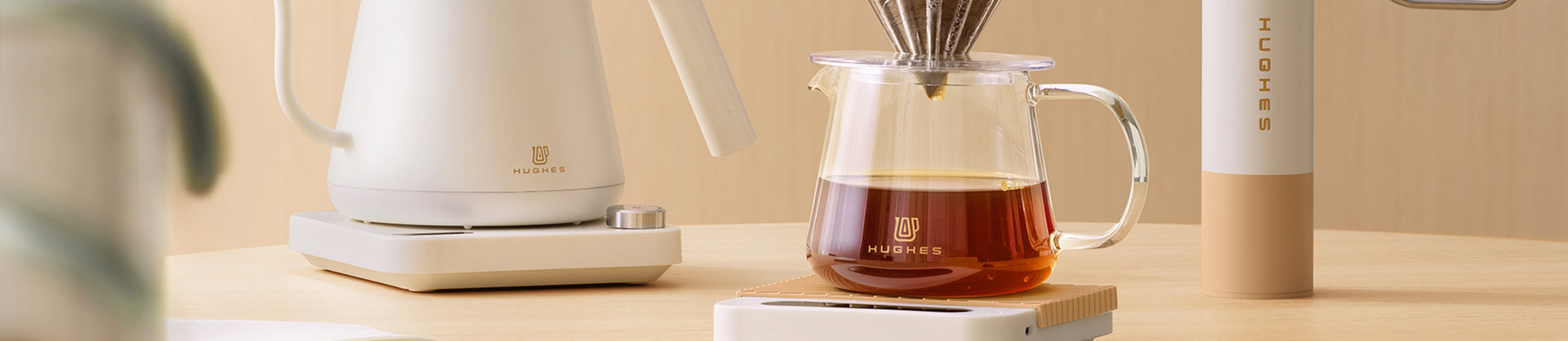
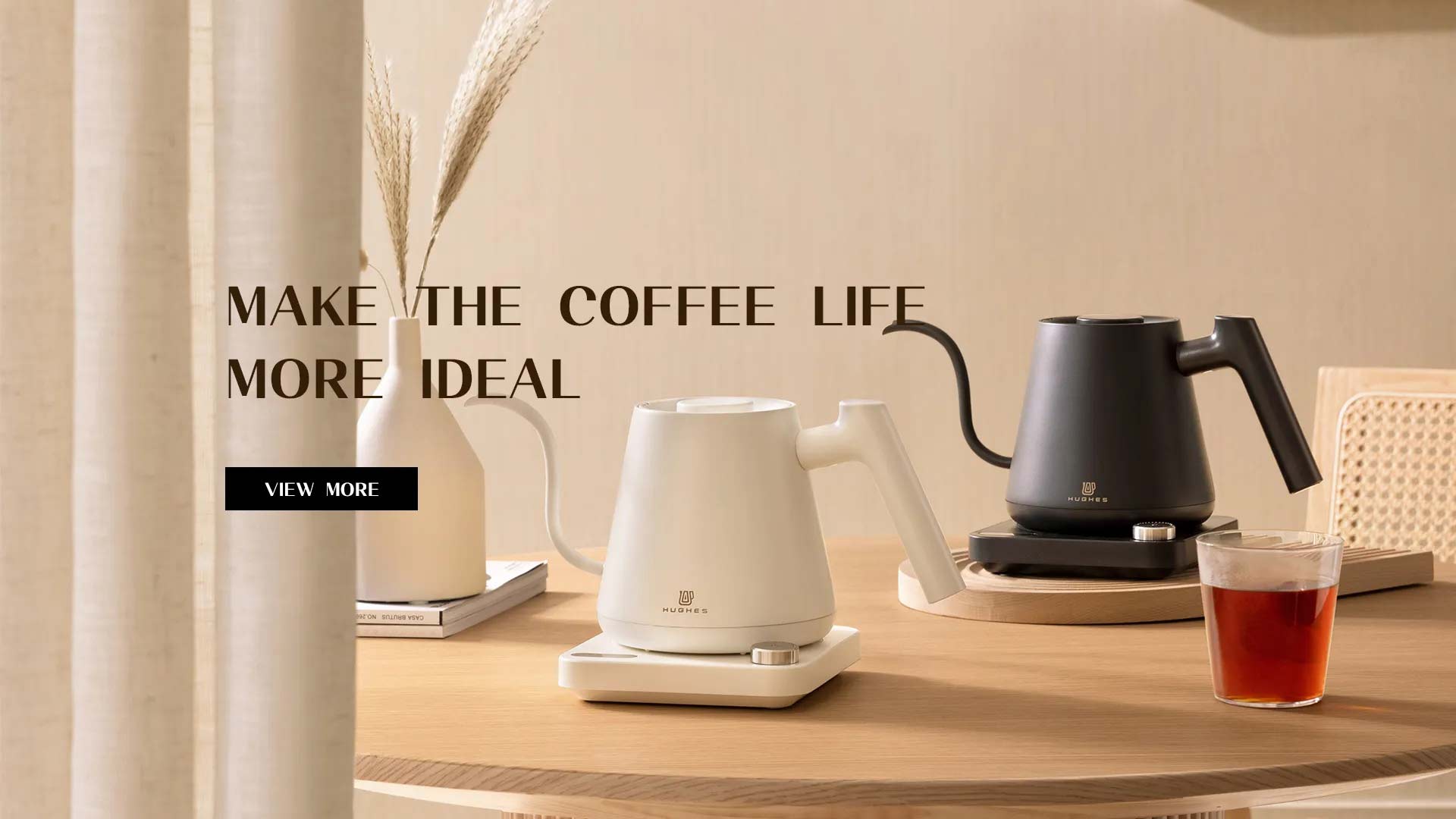
Heating milk in an electric kettle sounds simple, but from a manufacturer perspective it is only safe in the right product category. A standard water kettle is built mainly for heating water fast. Milk behaves differently because it foams, sticks, and burns more easily on hot surfaces. HUGHES states that boiling milk in a standard electric kettle is generally not recommended because it can burn onto the heating plate, overflow, and shorten product life. HUGHES also notes that the safest method for milk-based drinks is often to heat water in the kettle first and add milk separately, or to use a dedicated milk-heating product instead.
For beverage preparation, the best answer is usually not to force one appliance to do every job. HUGHES sells both electric kettles and milk frothers, which reflects how modern coffee equipment is designed around different heating tasks. On its milk frother page, HUGHES says one model can heat 150 ml of milk to 65°C in 120 seconds, with real-time temperature display from 20°C to 80°C and accuracy of about ±2°C. That is a much more controlled solution for milk service than directly boiling milk in a standard kettle.
From a food safety standpoint, the first rule is to start with pasteurized milk and keep it cold before use. The FDA says it strongly supports pasteurization for milk safety, and the CDC advises choosing pasteurized milk and keeping perishable foods at 40°F or colder to slow bacterial growth. For hospitality and appliance buyers, that means the equipment decision is about controlled reheating for beverage service, not about making raw milk safe inside a kettle.
So how should milk be heated when an electric kettle is part of the beverage setup? For a standard kettle, the safest workflow is to boil water only, then combine that hot water with milk ingredients in a separate cup, pot, or frothing system. HUGHES gives this recommendation for tea with milk powder and explains that direct milk heating inside the kettle leaves residue, affects taste, and makes cleaning harder. If the product is specifically engineered for milk heating, then controlled temperature, smooth food-contact surfaces, and easy-clean structure become essential. HUGHES also says kettles used for broader food-contact applications should have food-grade stainless steel interiors, stable heating bases, accurate temperature control, automatic shut-off, and easy-clean internal structure.
A quick comparison helps clarify the right product choice.
| Application | Standard electric kettle | Milk frother or milk heater |
|---|---|---|
| Water for coffee or tea | Strong fit | Limited need |
| Direct milk heating | Not ideal for routine use | Best fit |
| Residue control | Higher cleaning risk with milk | Designed for milk handling |
| Temperature precision | Depends on model | Better for milk service |
| Beverage consistency | Good for water preparation | Better for foam and milk texture |
The supplier decision also matters. Manufacturer vs trader is not only a pricing issue. It affects whether buyers can verify heating structure, food-contact materials, thermal protection, and batch consistency. HUGHES presents itself as an OEM and ODM manufacturer that later developed its own brand, and its site says it exports to Japan, South Korea, Europe, and the United States. The company also highlights laser welding equipment, a high-efficiency automatic cleaning line, and a dust-free assembly line. For buyers building a beverage appliance range, that kind of direct manufacturing visibility reduces sourcing risk.
The OEM and ODM process is especially important for milk-heating products because regional needs are not the same. HUGHES says its OEM and ODM support can include voltage customization, plug standards, temperature control programming, capacity changes, packaging design, and compliance labeling. For products aimed at milk drinks, the project sourcing checklist should also include maximum milk volume, target serving temperature, anti-burn design, easy-pour structure, cleaning method, and whether the product is for hotel rooms, offices, cafés, or retail home use. Those details shape whether the final product feels reliable in real use.
Bulk supply considerations become more important once the product moves from sample stage to long-term programs. Milk heating creates more residue and cleaning stress than water boiling, so manufacturing discipline matters. HUGHES states that its electric kettle production uses ISO9001-certified quality systems and integrated production capability, while its milk frother pages emphasize strict quality control and high-precision engineering. For distributors and private label buyers, this matters because long-term complaints often come from heating instability, coating failure, odor retention, and difficult cleaning rather than from appearance alone.
Manufacturing process overview and quality control checkpoints are the next filter. HUGHES says its facility uses laser welding, automatic cleaning lines, and controlled-environment assembly. Its product and article pages repeatedly emphasize food-grade 304 stainless steel, stable heating systems, thermal protection, and structured testing. These are not small details. Material standards used in the interior chamber and heating base directly affect whether milk residue sticks quickly, whether burnt odor remains, and whether the product is easy to maintain after repeated use. HUGHES also highlights food-grade 304 stainless steel, smooth polished interiors, flat heating base design, and sealed heating elements as key factors in safety and durability.
Export market compliance should be checked early as well. HUGHES says electric kettles for international markets must meet requirements covering electrical insulation, thermal protection, food-contact material compliance, and voltage and frequency compatibility. For buyers selling into regulated regions, that means the right question is not simply how to heat milk in an electric kettle. The better question is which product should be developed for safe milk service, and whether the supplier can document performance and compliance at scale.
In practical terms, heating milk in a standard electric kettle is usually not the best product strategy. The stronger solution is to pair an electric kettle for water preparation with a dedicated milk frother or milk-heating appliance for controlled milk service. That is where HUGHES shows a clear advantage. Its portfolio covers both kettles and milk frothers, and its manufacturing model combines OEM and ODM flexibility, food-grade stainless steel construction, ISO9001 quality systems, and export experience. For buyers building a reliable coffee and beverage line, that combination is far more valuable than treating every heating task as a one-appliance shortcut.

 WhatsApp:
 Mobile Phone:
 Contact Now