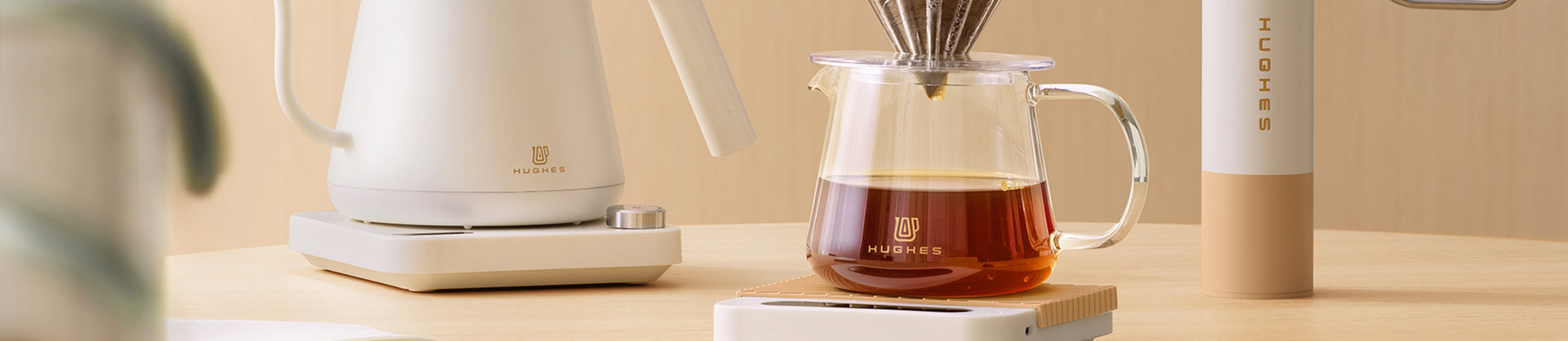
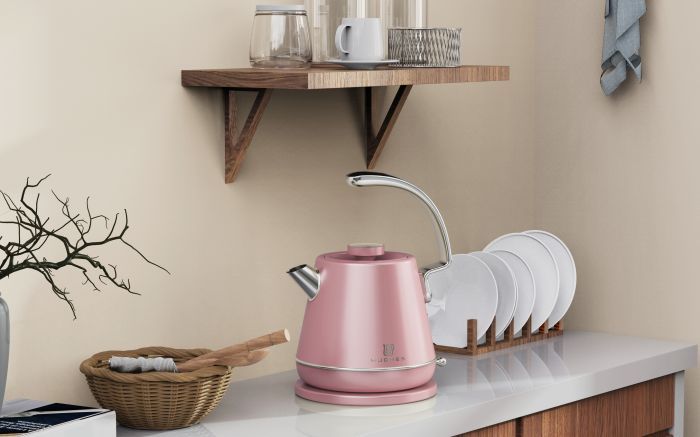
Clean electric tea kettle maintenance is important because mineral scale, tea residue, and daily water marks can affect heating speed, taste, appearance, and long-term reliability. For retailers, hotels, coffee shops, tea rooms, office beverage areas, and hospitality procurement, a clean kettle is not only about hygiene. It also helps reduce after-sales complaints and keeps the product experience consistent.
Hard water is one of the main reasons kettles need regular cleaning. The U.S. Geological Survey explains that water can dissolve calcium and magnesium from soil and rock, and these minerals create hard water in many regions. When hard water is repeatedly boiled, minerals can settle on the heating plate and inner wall, forming white scale. Over time, scale may slow heat transfer, create noise, and leave an unpleasant look inside the kettle.
Cleaning Area Why It Matters Recommended Check
Inner wall Reduces scale and water marks Check weekly in hard-water areas
Heating base Supports faster heating Remove mineral buildup regularly
Spout Keeps pouring clean Rinse after tea or mineral-heavy water
Lid and rim Prevents residue buildup Wipe with a soft cloth
Exterior shell Maintains retail appearance Clean with mild damp cloth
For electric tea kettles used in coffee and tea preparation, cleaning also affects flavor. Old scale and tea stains may change the taste of hot water, especially when brewing green tea, black tea, pour-over coffee, or milk-based drinks. Specialty coffee brewing references often recommend water around 90°C to 96°C for coffee extraction, so a kettle with stable temperature control and a clean interior helps users prepare drinks more consistently.
HUGHES provides electric kettles, electric gooseneck kettles, temperature control kettles, coffee kettles, Coffee Grinders, milk frothers, coffee servers, and coffee brewing tools. Its DE-928A electric pour-over kettle uses 304 stainless steel housing, 1.0L capacity, 220–240V 1350–1500W options, accurate temperature control, keep-warm function, concealed heating element, and automatic switch-off for safer daily use.
Professional advice is to clean an electric tea kettle with safe, non-abrasive methods. Operators should unplug the kettle, let it cool, avoid immersing the base, and use food-safe descaling methods according to the product manual. Strong metal brushes should not be used on stainless steel interiors because they may damage the surface. For commercial use, cleaning frequency should be based on water hardness, daily boiling volume, and beverage type.

 WhatsApp:
 Mobile Phone:
 Contact Now