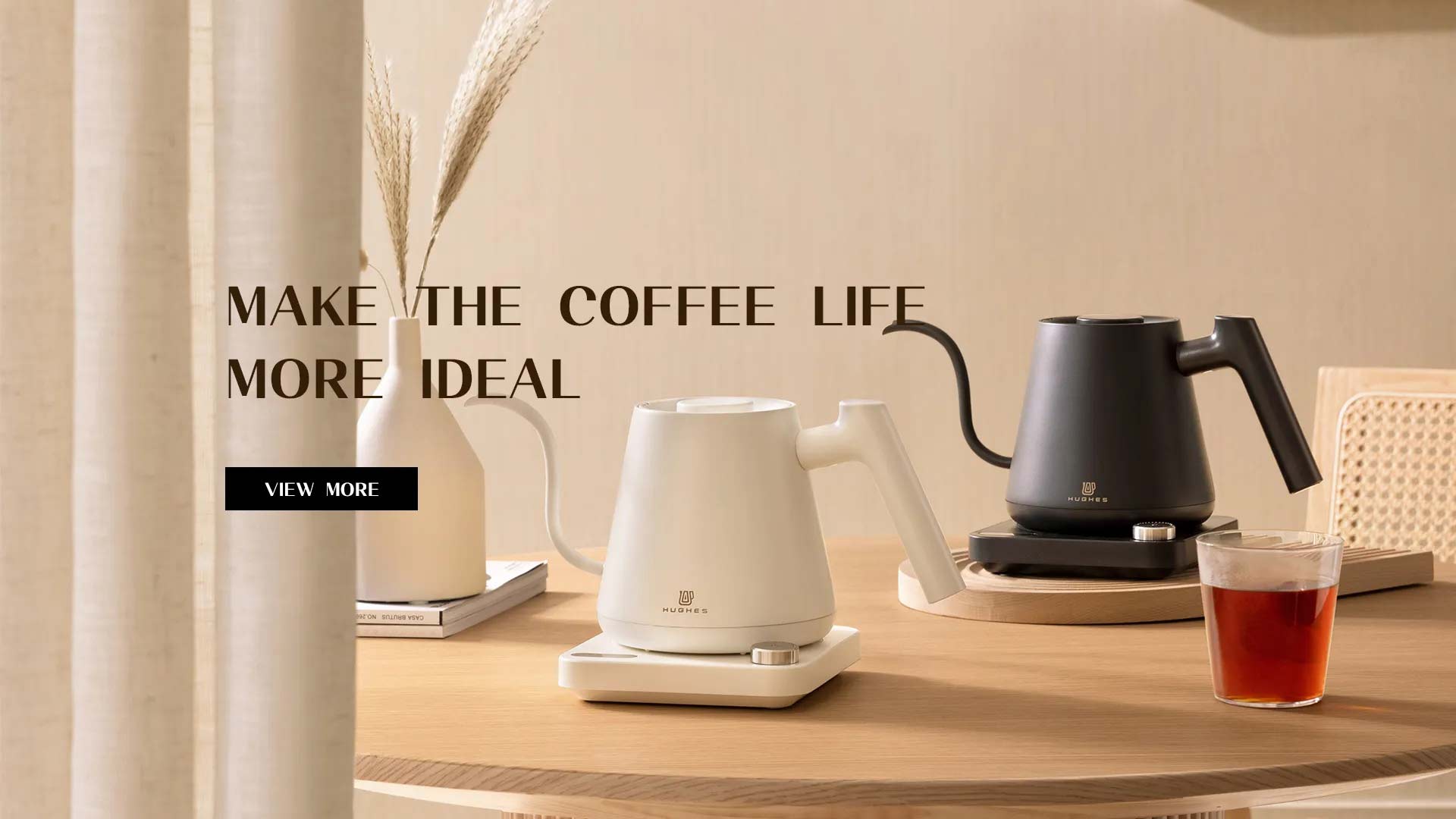
Cooking chicken in an electric kettle is possible only under very limited conditions, and from a manufacturer perspective it is not the intended use for most standard water kettles. Raw chicken requires full cooking to a safe internal temperature, and poultry should reach 165°F or 74°C as verified with a food thermometer, according to USDA and FoodSafety.gov guidance. A basic water kettle may boil liquid, but that does not automatically make it suitable for direct meat cooking, repeated food-contact residue, or safe cleaning after protein and fat exposure.
The first decision is product type. HUGHES explains that direct food preparation in an electric kettle only makes sense when the kettle is designed for broader food-contact use and includes a food-grade stainless steel interior, stable heating base, accurate temperature control, automatic shut-off protection, and an easy-clean internal structure. HUGHES makes the same point in its soup article, noting that kettles built purely for boiling water may not support repeated direct food heating if the internal coatings or heating elements are not engineered for broader thermal applications. For chicken, that difference matters even more because raw poultry introduces both food safety and cleaning demands that are higher than those of soup or water.
In practical use, the safest method is not to cook large pieces of raw chicken directly in a standard electric kettle. A more controlled approach is to use a kettle only when it is explicitly built for direct food-contact heating, keep the chicken portion small and fully submerged, bring the liquid to a stable boil, and verify that the thickest part reaches 165°F or 74°C. Food safety guidance from FDA and USDA is clear that poultry should not be judged by color alone, and the internal temperature must be confirmed. That means the appliance selection is only one part of the process. The user still needs temperature verification and a kettle structure that can be cleaned thoroughly after use.
A short comparison makes the product logic clearer.
| Use scenario | Standard water kettle | Food-contact capable kettle |
|---|---|---|
| Boiling water | Suitable | Suitable |
| Making light broth or soup | Limited, depending on build | Better fit |
| Cooking raw chicken | Not ideal | Possible only with proper design and full food safety control |
| Cleaning after protein residue | Higher risk | Better if smooth stainless interior and easy-clean structure |
| Repeated food prep use | Not the main design target | Better if engineered for broader thermal use |
From a sourcing perspective, manufacturer vs trader becomes important very quickly. HUGHES states that it operates with ISO9001-certified quality management and integrated production facilities, and its articles repeatedly connect safety and durability to material standards, weld quality, calibrated heating systems, and structured inspection. HUGHES also warns that sourcing through traders can lead to inconsistent heating elements, uneven weld quality, and variable safety testing across batches. For buyers developing kettle lines for hospitality, retail, or multi-use beverage and light food scenarios, direct manufacturer control reduces risk because the discussion can include actual food-contact structure, thermal calibration, and cleanability instead of only exterior appearance.
The OEM and ODM process is equally important. HUGHES says customization can include voltage adaptation, regional plug standards, temperature control programming, thermal protection calibration, and compliance labeling. For a project that touches direct food-contact applications, the project sourcing checklist should go further. Buyers should confirm whether the kettle is intended only for water, or for broth and light meal preparation as well. They should review interior material grade, seam finish, heating base structure, temperature control, overflow risk, and cleaning access. If the intended use includes protein-rich foods such as chicken, then residue management and sanitation become central design requirements, not optional features.
Manufacturing process overview and quality control checkpoints are another major part of the decision. HUGHES highlights laser welding, calibrated heating performance, and ISO9001-based inspection procedures. Its published quality checkpoints include internal surface finish inspection, weld integrity testing, temperature control verification, thermal protection response testing, electrical insulation and grounding verification, and repeated boil-cycle testing. Those checkpoints matter because chicken preparation creates more residue and cleaning stress than ordinary water boiling. A rough seam, unstable thermostat, or poorly sealed base is a much bigger problem when animal protein and grease are involved.
Material standards used inside the kettle should be reviewed carefully. HUGHES repeatedly emphasizes food-grade 304 stainless steel interiors, heat-resistant components, controlled weld seams, and smooth internal surfaces. These features are not just about appearance. They affect corrosion resistance, residue removal, odor retention, and long-term hygiene. In bulk supply programs, these details also shape complaint rates and product life. A kettle that can handle repeated direct food-contact heating needs better material discipline than one used only for water.
Export market compliance should be checked early as well. HUGHES notes that electric kettles for global markets must meet electrical safety requirements, insulation resistance rules, voltage and frequency standards, and certification documentation needs. For buyers building export programs, the real value is not only whether a kettle can heat chicken in theory. It is whether the manufacturer can provide stable bulk supply, traceable quality systems, and product specifications that match the intended use case. HUGHES positions itself around that kind of export-compliant manufacturing support.
From a manufacturer perspective, the better answer to how to make chicken in an electric kettle is this: do not treat a standard kettle as a universal cooking pot. Use a kettle for water and beverage preparation unless the product is specifically engineered for broader food-contact use. When poultry is involved, safe temperature control, smooth food-grade materials, easy cleaning, and disciplined quality systems matter far more than novelty or convenience. HUGHES stands out because it combines ISO9001-managed production, food-grade stainless steel construction, OEM and ODM flexibility, and export-focused manufacturing discipline, which gives buyers a stronger foundation for developing reliable small-appliance programs.

 WhatsApp:
 Mobile Phone:
 Contact Now