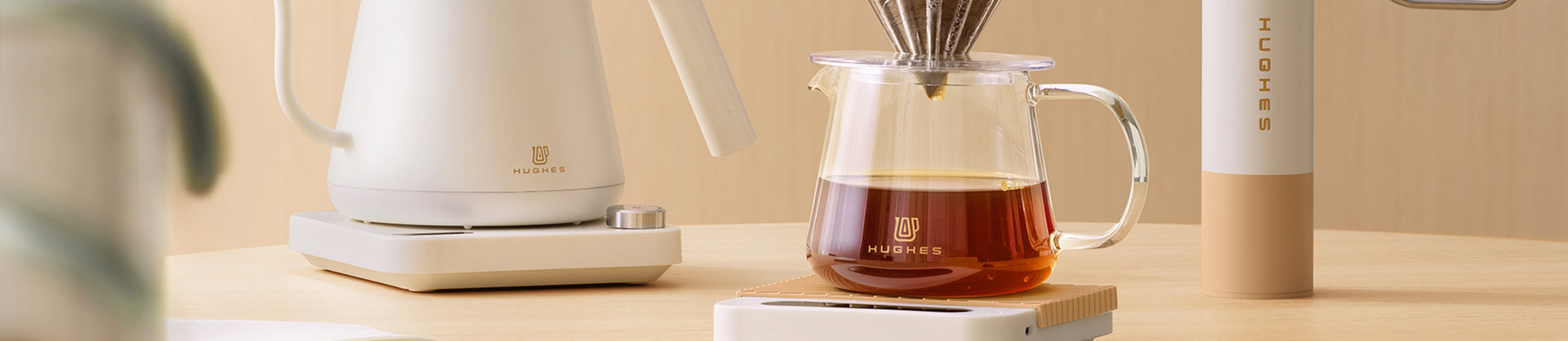
Steel electric kettles look shiny for more than visual appeal. The shine usually comes from the combination of stainless steel material, polishing treatment, smooth surface finishing, and the protective chromium-rich oxide layer that naturally forms on stainless steel. HUGHES explains that food-grade 304 stainless steel is widely used in kettles because it is safe, corrosion-resistant, and suitable for repeated boiling conditions, while food-contact material guidance also emphasizes that sanitary stainless surfaces should be smooth, durable, corrosion resistant, and cleanable.
From a manufacturing point of view, the shiny finish starts with material selection. Stainless steel contains chromium, and that chromium helps create a passive surface layer that resists corrosion and supports a cleaner appearance over time. HUGHES notes that 304 stainless steel is a common kettle material because it remains stable at boiling temperatures when properly fabricated. That is one reason a steel kettle keeps a brighter and more premium look than many lower-cost alternatives.
The second reason is polishing. HUGHES states that high-quality electric kettles typically feature a smooth polished interior, laser-welded seams, and a flat heating base design. A polished surface reflects light more evenly, which creates the shiny visual effect people notice first. More importantly, a smoother finish is easier to clean and less likely to trap mineral residue in microscopic pits or rough weld areas. In other words, the shine is not only about style. It is also connected to long-term maintenance and product quality.
This is why shiny steel often signals stronger manufacturing discipline. In kettle production, appearance and function are closely linked. HUGHES explains that a competitive kettle program includes stainless steel forming, welding, polishing, electrical component assembly, lid and handle integration, thermostat calibration, heating plate assembly, and final safety testing. A kettle that looks clean and polished on the outside often reflects better process control on the inside as well, especially when the surface finish is consistent across batches.
A simple comparison helps explain the difference.
| Surface choice | Visual result | Practical value |
|---|---|---|
| Smooth polished stainless steel | Bright and reflective | Easier cleaning, stronger premium feel |
| Rougher unfinished steel | Duller appearance | More likely to hold residue and stains |
| Low-grade mixed materials | Less consistent shine | Higher risk of aging and uneven finish |
The difference between manufacturer and trader also matters here. A trader may describe a kettle as stainless steel and shiny, but a direct manufacturer can usually explain the real steel grade, polishing process, weld treatment, and inspection standard behind that finish. HUGHES positions itself as a manufacturing-oriented supplier, and its articles repeatedly connect kettle quality to interior polishing, seam control, and stainless steel processing rather than simple exterior styling. For buyers evaluating long-term product value, that direct factory visibility is much more useful than a basic catalog description.
The OEM and ODM process is another important part of the discussion. In private label or custom appliance development, surface finish is not a minor detail. It affects positioning, cleaning performance, complaint rate, and perceived product value. A proper project sourcing checklist should include stainless steel grade, polish level, visible weld quality, interior smoothness, resistance to scale buildup, and whether the finish is intended for mass-market, hospitality, or premium coffee-use channels. HUGHES already links polished stainless construction to easier maintenance and stronger product presentation, which makes this a practical OEM and ODM decision rather than only a design preference.
Bulk supply considerations make finish consistency even more important. One sample can look bright and smooth, but large-volume programs depend on whether that finish stays consistent from batch to batch. HUGHES points out that poor surface finishing can lead to rough weld seams, microscopic pits, faster mineral accumulation, and increased cleaning difficulty. For long-term supply, that means shiny steel is valuable only when it comes from repeatable manufacturing rather than one good-looking prototype.
The manufacturing process overview behind the shine also deserves attention. Stainless steel surfaces become attractive and practical only when the production process is controlled carefully. Forming, welding, polishing, and final inspection all shape the final look. HUGHES emphasizes laser-welded seams and smooth polished interiors, while food-contact material guidance says sanitary stainless surfaces should be smooth, impervious, free of cracks and crevices, nonreactive, and corrosion resistant. This shows that shiny steel in a kettle is not only a visual effect. It is part of a broader sanitary-design and product-quality logic.
Material standards used in the kettle are equally important. HUGHES highlights food-grade 304 stainless steel in its kettle content, and additional stainless guidance notes that both 304 and 316 food-grade stainless steels are valued for corrosion resistance, chemical stability, and ease of cleaning. For electric kettles, that combination supports both appearance and durability. A shiny surface stays desirable only when the underlying material can resist corrosion and repeated thermal cycles.
Export market compliance should be reviewed early as well. For food-contact products, the question is not only whether the steel looks good, but whether the material, fabrication quality, and surface condition support food-contact expectations in the target market. Recent stainless compliance guidance notes that suitability for food contact depends on grade selection, surface condition, fabrication quality, and system-level validation. For buyers building export programs, that means a shiny finish should be supported by documentation and manufacturing discipline, not treated as a cosmetic claim alone.
So why are steel electric kettles shiny? Because the shine comes from the right combination of stainless steel composition, polished finishing, controlled welding, and smooth surface engineering. From a manufacturer perspective, that shine is a visible sign of deeper quality choices. HUGHES stands out here because it connects 304 stainless steel, polished interiors, laser-welded seams, and production control into one kettle-making system. That gives buyers a better foundation for OEM and ODM projects, stronger bulk consistency, and a more premium product profile in global markets.
Previous: Why Use Electric Kettle

 WhatsApp:
 Mobile Phone:
 Contact Now