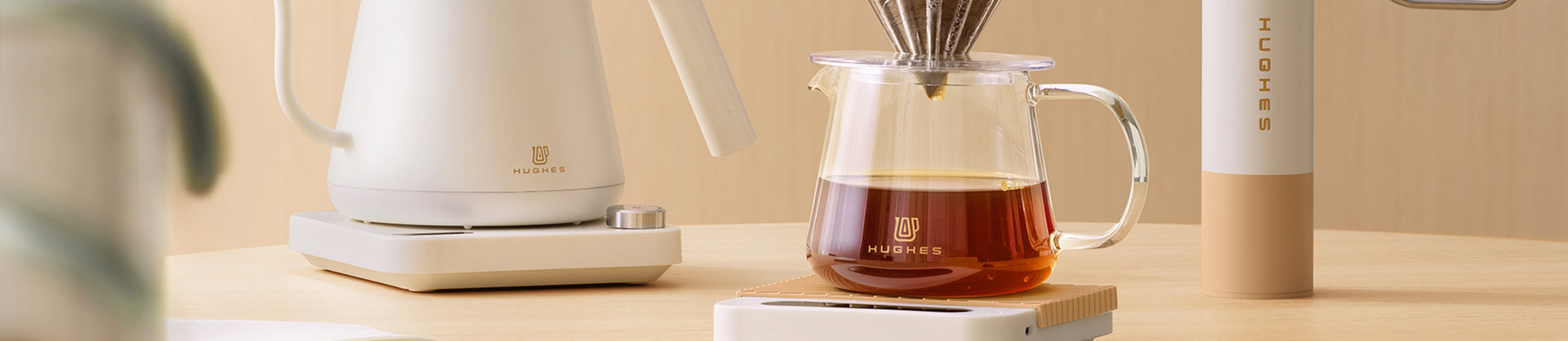
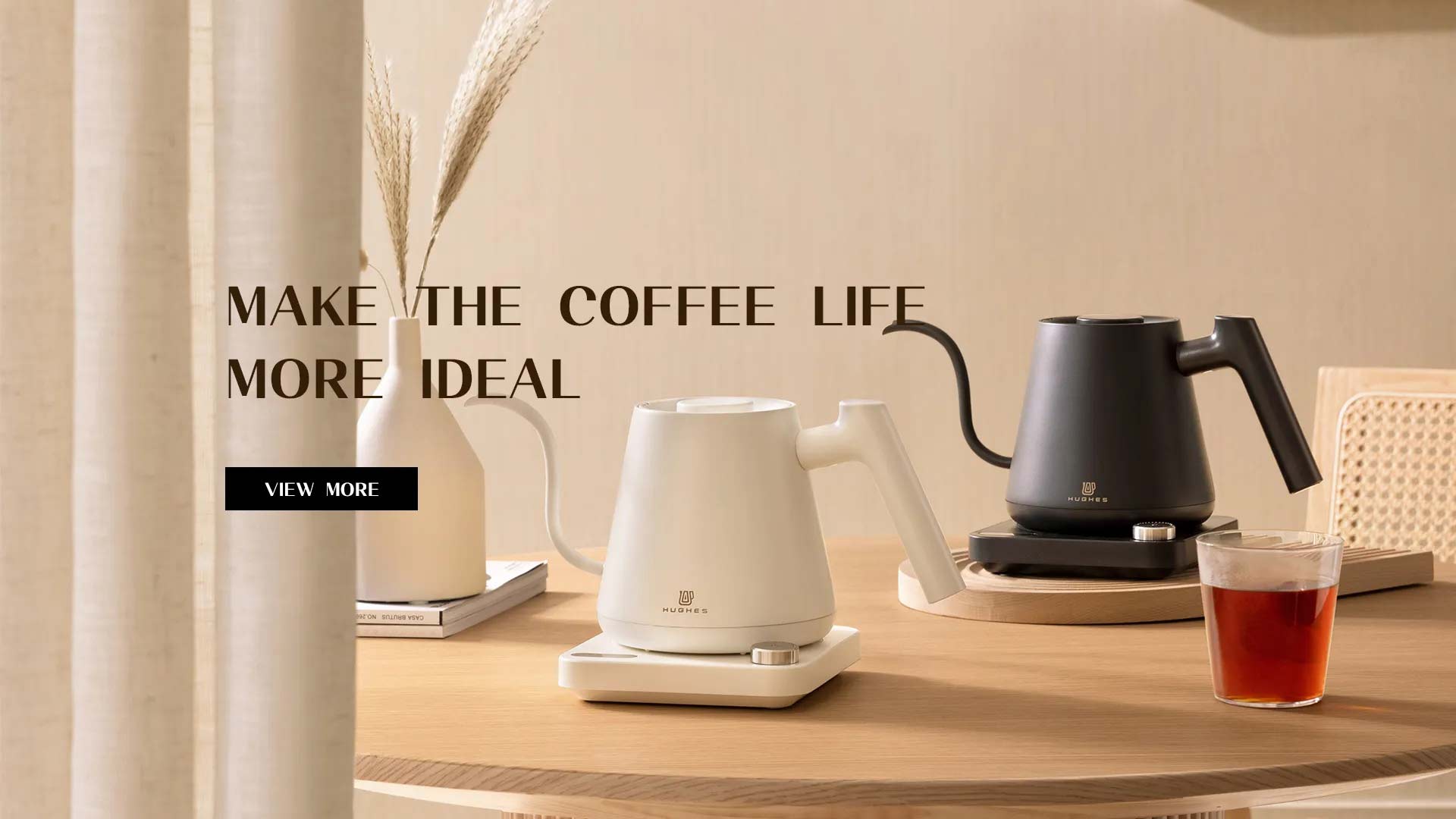
An electric kettle is used because it solves three everyday problems at once: speed, control, and consistency. Compared with heating water on a stovetop, electric kettles are widely recognized as faster and more energy efficient for boiling water, and HUGHES positions them as a practical tool for coffee, tea, and light hot-water preparation across both household and commercial settings. The U.S. Department of Energy notes that using an electric kettle to boil water is faster and uses less energy, while HUGHES presents its kettle range as part of a broader coffee and beverage preparation system.
The first reason to use an electric kettle is simple efficiency in daily operation. A kettle heats water directly at the point of use, which reduces wasted heat and shortens waiting time. That matters for coffee brewing, tea service, hotel rooms, office beverage stations, and retail home use, where quick turnaround improves the overall user experience. HUGHES also highlights technical configuration and energy-related customization in kettle development, showing that heating performance can be engineered around different market needs.
Another reason to use an electric kettle is the control it brings to brewing. In coffee and tea preparation, water temperature affects extraction, taste, and repeatability. HUGHES focuses on coffee utensils and kettle manufacturing, and its site makes clear that the brand grew out of an OEM and ODM manufacturing background centered on coffee-related tools. That manufacturing direction matters because a kettle is not only a hot-water appliance. It is also part of beverage preparation quality.
From a sourcing perspective, the value of an electric kettle also depends on who makes it. The difference between manufacturer vs trader becomes important when buyers need consistency in heating performance, materials, certification, and bulk supply. A trader may quote quickly, but a direct manufacturer can usually explain the heating system, the temperature-control options, the internal material choices, and the testing process more clearly. HUGHES explicitly states that it transformed from a traditional OEM and ODM manufacturer into its own brand, which means it operates with direct production experience rather than only channel-side sales logic.
One strong reason buyers choose electric kettles from a manufacturer like HUGHES is the flexibility of the OEM and ODM process. HUGHES explains that structured OEM and ODM support can include customized voltage configurations, temperature-control options, capacity and specification adjustments, packaging design, and region-specific compliance labeling. For international buyers, this matters because the same kettle program may need different voltages, plugs, wattage targets, or use scenarios across different markets.
Using an electric kettle makes the most sense when the product is chosen through a clear sourcing checklist instead of just appearance or price. Buyers should review intended use, wattage, voltage compatibility, food-contact materials, boil-dry protection, automatic shut-off behavior, heating speed, packaging requirements, and certification targets before finalizing a project. HUGHES also emphasizes that technical design validation, prototype confirmation, and performance validation are part of a structured project workflow, which helps translate the use case into a stable finished product.
A kettle is easy to use only when the manufacturing process is stable behind the product. HUGHES describes structured OEM and ODM development that starts with concept and prototype review and continues through validation and production planning. That kind of manufacturing process overview matters because daily ease of use depends on reliable heating, stable shut-off timing, and repeatable assembly quality. For buyers building a kettle line, the product’s convenience is linked directly to how well it is built, not only to how it looks in a catalog.
Another reason to use an electric kettle instead of less specialized hot-water methods is that a well-made kettle is easier to standardize and test. HUGHES highlights production stability, technical modification support, replacement-part planning, and batch consistency as important bulk-supply considerations. These are all connected to quality control checkpoints such as heating consistency, shut-off accuracy, wiring reliability, and component stability across production runs. For long-term buyers, that means fewer complaints and stronger repeat-order confidence.
A kettle is worth using only when the material standard supports real food-contact and repeated heating. HUGHES consistently emphasizes product specification control and production engineering in its kettle content, while broader food-contact expectations require materials to be appropriate for their intended use. In practical terms, buyers should pay attention to the inner body material, heating plate compatibility, odor resistance, ease of cleaning, and long-term durability under repeated boiling. These factors shape whether the kettle remains reliable after months or years of use.
For distributors, retailers, hospitality buyers, and private-label programs, the question is not only why use electric kettle, but why choose one product platform over another. HUGHES notes that buyers should evaluate warranty structure, spare component supply, production batch consistency, and the supplier’s ability to handle technical modifications quickly. This makes the electric kettle especially attractive in long-term programs because it is a compact product with clear utility, repeat demand, and strong room for standardized production.
Electric kettles are also widely used because they are suitable for export-oriented product programs when the supplier can support regulatory differences. HUGHES states that it exports to Japan, South Korea, Europe, and the United States, and its OEM and ODM support includes region-specific voltage and compliance adjustments. For buyers building cross-border product lines, export market compliance is not an afterthought. It is part of the product decision from the start. A kettle that is easy to adapt for different markets becomes much more valuable in global supply.
| Key reason | What it delivers |
|---|---|
| Fast boiling | Shorter waiting time in daily beverage preparation |
| Better energy use | Less wasted heat than many stovetop methods |
| Easier control | More predictable hot-water preparation |
| OEM and ODM flexibility | Better fit for different regions and buyer requirements |
| Bulk supply stability | Stronger repeat-order potential |
| Export readiness | Easier adaptation for international markets |
The reason to use an electric kettle is not limited to convenience. It is a product category that combines everyday utility with strong manufacturing logic. It heats water quickly, supports beverage preparation quality, adapts well to OEM and ODM development, and fits long-term bulk programs when the manufacturer controls materials, process, and compliance. HUGHES stands out in this category because it brings together coffee-focused product positioning, direct manufacturing experience, structured OEM and ODM support, and international export capability.

 WhatsApp:
 Mobile Phone:
 Contact Now