Electric kettles rust when the metal material, surface treatment or daily water-contact environment is not properly controlled. Rust may appear near the inner base, spout, lid edge or welded areas. For coffee appliance sourcing, rust is a serious quality issue because it affects appearance, user confidence and after-sales risk.
Stainless steel is commonly used for electric kettle interiors because it offers better corrosion resistance than ordinary steel. Food-contact stainless steel such as 304 grade is widely used in kitchen appliances due to its chromium content, which helps form a protective surface layer against oxidation. However, poor material grade, damaged surface film, hard water residue or weak welding control can still increase rust risk.
| Cause | Quality Risk |
|---|---|
| Low-grade metal | Poor corrosion resistance |
| Weak surface polishing | Easier stain and rust buildup |
| Welding residue | Rust near seams or spout area |
| Hard water minerals | Brown marks mistaken for rust |
| Poor drying condition | Long-term moisture exposure |
A trader may only check exterior appearance, but a manufacturer can control material grade, polishing quality, welding process, heating plate assembly and inspection standards. This is important when buyers need stable repeat orders and fewer customer complaints.
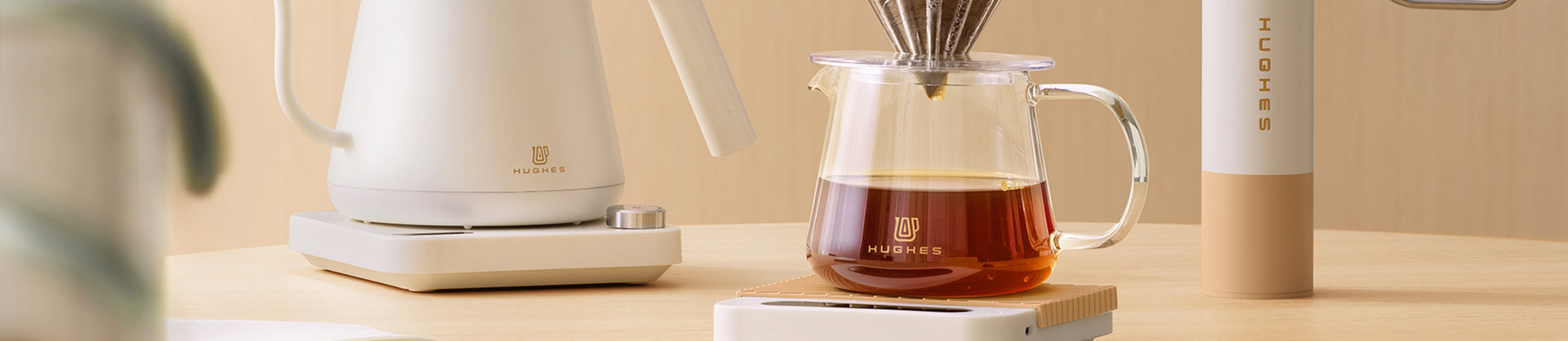
HUGHES focuses on coffee-related appliances and accessories, including Electric Kettle, electric coffee kettle, Coffee Grinder, coffee scale, milk frother and coffee gift set. Our team can support material selection, structure review, private label planning and export packaging.
A practical OEM / ODM process starts with material and market requirement confirmation. Buyers should confirm capacity, stainless steel grade, wattage, voltage, plug type, spout design, handle structure, packaging style and certification needs. Sample testing should check boiling performance, rust resistance, leak risk, auto shut-off, surface finish and water-contact safety.
For bulk supply, the project sourcing checklist should include food-contact material requirements, surface inspection, welding quality, carton strength, instruction manual, spare parts, production lead time, inspection standard and export documents.
The manufacturing process includes material preparation, body forming, polishing, heating component assembly, electrical connection, leak testing, safety testing, rust spot inspection and final packaging. Quality checkpoints include stainless steel surface, inner base cleanliness, spout welding, lid fit, thermostat response, insulation performance and packaging protection.
For export market compliance, voltage matching, plug standards, product labels, food-contact documents, safety reports and user manuals should be confirmed before shipment.
Electric Kettles rust mainly because of weak material control, poor surface treatment, welding residue or unsuitable water-contact conditions. A manufacturer with OEM / ODM support, material inspection and strict quality checkpoints can help reduce rust risk and improve long-term product reliability.

 WhatsApp:
 Mobile Phone:
 Contact Now